Air monitoring
Published over 12 years ago. See the latest and most current information on Air monitoring.
New research has suggested that the levels of air pollutants in Oxford Street, London, are the highest in the world.
Scientists at King's College London (KCL) have made claims that the annual and hourly levels of nitrogen dioxide concentration are the "highest in the world".
Air quality scientists at KCL set up a monitoring station on the capital's famous shopping street and found the highest level recorded was 463mg3 (microgrammes per cubic metre). This figure is 11 times higher than the safe levels recommended by the European Union of just 40mg3.
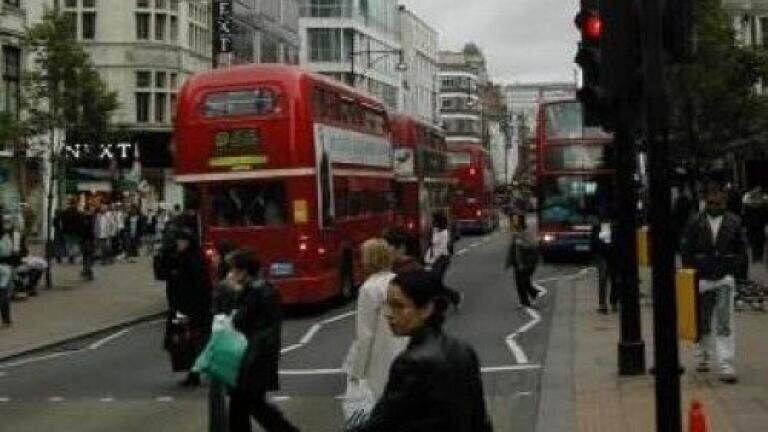
On average, the levels of nitrogen dioxide measured 135mg3, which is still four times the maximum EU limit. It is thought this is mainly because of the large amount of buses and taxis visiting the popular shopping street on a daily basis.
Speaking to the Sunday Times, KCL’s Dr David Carslaw said: “To my knowledge this is the highest in the world in terms of both hourly and annual mean.
“Nitrogen dioxide concentrations [on Oxford Street] are as high as they have ever been in the long history of air pollution.”
The news comes as data released by the mayor of London last year revealed that Oxford Street is one of the most polluted roads in London for both nitrogen dioxide and other pollutants.
The city has attempted to reduce the high levels of nitrogen dioxide, a colourless gas produced by diesel engines, by enforcing various initiatives. London mayor Boris Johnson has rolled out 600 low emission hybrid buses and plans to introduce an ultra-low emission zone in the capital by 2020.
The Evening Standard reports that City Hall has already reduced the number of buses by a fifth but more needs to be done to control traffic emissions.
Richard Dickinson, chief executive of New West End Company which represents traders in Oxford Street, Regent Street and Bond Street, told the newspaper that a reduction in traffic was essential.
He added: “We are working closely with the relevant London authorities to look at longer term traffic reduction initiatives and we are keen to see ideas rapidly put in place. Businesses in the West End want action.”
IET Guide 2026



 Product directory