Water/wastewater
Its great promise lies in shifting supervision from slow, retrospective audits to something that feels almost alive: algorithms read reports, flag anomalies and even predict where the next scandal might occur.
This same toolkit is now creeping into environmental oversight.
AI and machine learning models, once trained on credit scores and stock trades, are being retrained to sift through sustainability reports and satellite images to catch inconsistencies or outright falsehoods.
Natural‑language processing is proving particularly adept at extracting climate data buried in dense corporate filings and press releases.
When the Bank for International Settlements teamed up with the European Central Bank and Deutsche Bundesbank to build Project Gaia, the aim was clear: automate the gruelling task of reading thousands of annual reports and distil them into key climate indicators.
By harnessing large language models, Gaia can identify greenhouse gas emissions and green bond issuance with unprecedented speed, harmonising data from across jurisdictions.
This automation frees up human analysts to interpret, rather than collect, data and hints at a future in which compliance monitoring is near real‑time.
Gaia isn’t alone. France’s Project Carbon Counter examines insurers’ portfolios to compute the carbon footprint of their investments and allows regulators to stress test those positions under different policy scenarios.
Meanwhile, Project Viridis, a collaboration between the BIS and Singapore’s Monetary Authority, envisages a modular platform where regulators see snapshots of financed emissions, aggregated or modelled, and map exposure to physical hazards across geographies.
These initiatives suggest that the centre of gravity for environmental supervision is shifting from annual paper submissions to dynamic digital twins.
The technological arsenal doesn’t stop at document scraping.
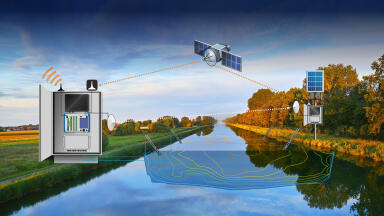
Speeches from BIS officials increasingly highlight remote‑sensing devices, IoT sensors and satellite feeds as future components of supervisory infrastructure.
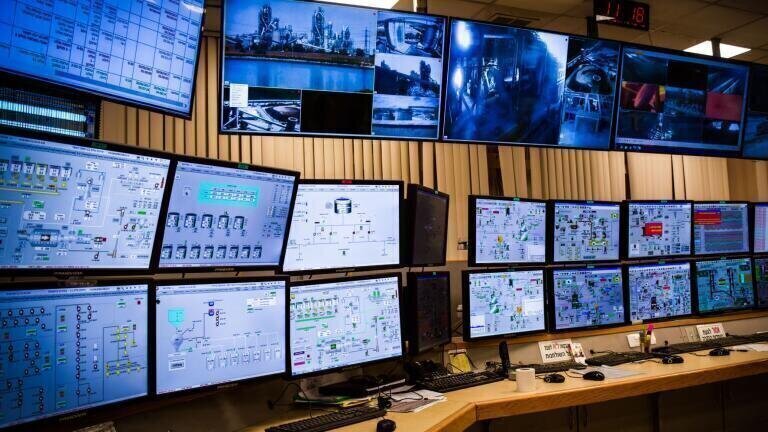
Imagine a regulator watching a dashboard that combines factory emissions from ground sensors with satellite‑based deforestation alerts.
Such integrations would allow for immediate responses when pollution thresholds are exceeded, moving from reactive enforcement to proactive prevention.
One of the most ambitious projects is the BIS’s digital twin initiative.
By creating a digital replica of physical systems like river basins or forests, supervisors can simulate extreme weather events and test how financial institutions would fare under different climate scenarios.
These virtual environments draw on real-time data to show, for example, how a cyclone in the South China Sea might ripple through insurance claims and commodity prices.
Digital twins don’t just illustrate risk; they let regulators and firms rehearse responses in a safe space before disaster strikes.
Although suptech’s roots are financial, its branches are spreading.
The Dynamic Knowledge Management System (DKMS) is designed not for banks but for environmental agencies.
It aggregates sensor data, citizen observations and location information to support environmental impact assessments and public participation in decision‑making.
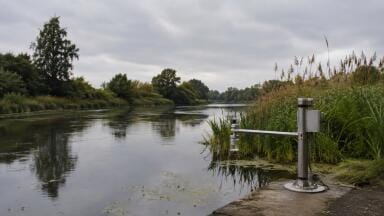
Similar tools could help local authorities manage data from air quality monitors or water pollution sensors, turning raw numbers into actionable knowledge.
Such applications show how supervisory technology can underpin environmental policy, bridging the gap between grassroots monitoring and institutional oversight.
What’s left to measure that we’re still blind to?
For one, biodiversity loss rarely appears in financial statements, yet it poses systemic risks to sectors from agriculture to pharmaceuticals.
Suptech could integrate camera traps, acoustic sensors and even citizen‑science apps to monitor species decline and inform land‑use decisions.
Another frontier is automated enforcement: smart contracts on a blockchain could trigger penalties when emissions exceed predefined thresholds.
There’s also room to connect suptech with public health datasets, revealing how pollution spikes correlate with hospital admissions and prompting cross‑agency interventions.
Institutions, too, will need to evolve. Adopting these tools requires skilled data scientists who can navigate privacy concerns and avoid over‑reliance on opaque algorithms.
International co‑operation becomes crucial as supply chains cross borders and environmental risks cascade globally.
Yet the prize is clear: a supervisory ecosystem that anticipates problems rather than reacts to them, and that helps environmental professionals prepare for a world of increasingly complex risks.
Suptech for environmental monitoring is not a silver bullet. It’s a new set of instruments that, when used wisely, could transform how we understand and protect the natural systems upon which our societies depend.
IET Guide 2026

 Product directory















.jpg)