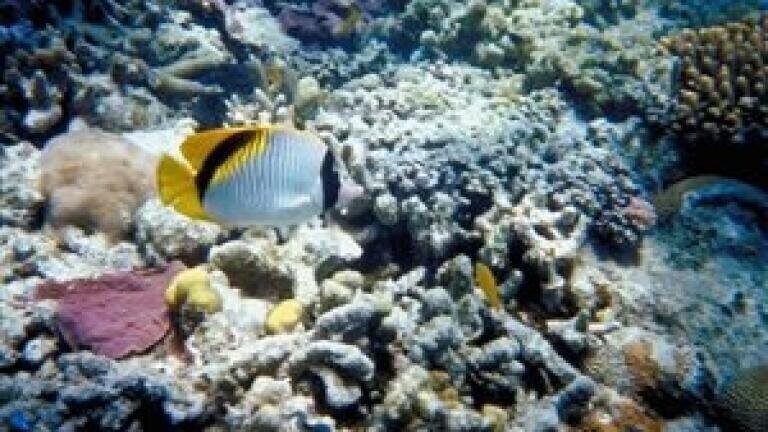
Some of the world's most impressive coral reefs could disappear within the next 100 years, a new study has suggested.
Research carried out by Dr Jacob Silverman from the Carnegie Institution in Washington indicate that seas are becoming increasingly acidic, the Daily Mail reports.
He noted that these ecosystems, which "harbour the highest diversity of marine life in the ocean" are likely to be "severely reduced".
A sharp increase in acid levels caused by CO2 will make it impossible for the coral to extract the minerals from the sea that are necessary to form its skeleton.
"All coral reefs are expected to stop their growth and start to disintegrate when atmospheric carbon dioxide reaches 560 parts per million - double its pre-industrial level," Dr Silverman added.
In related news, speaking at a meeting of the American Association for the Advancement of Science 2009, Dr Jason Hall-Spencer from the University of Plymouth noted that many coral reefs that have just been discovered are already at risk of being damaged by global warming.



 Product directory



.jpg)








.jpg)





.jpg)