Environmental laboratory
Testing soils for heavy metals, checking toxic aerosols captured on air filters, and monitoring industrial waste streams all require analytical techniques that can handle varied sample types without adding unnecessary complexity to the workflow. Energy dispersive X-ray fluorescence (EDXRF) offers a practical approach for environmental laboratories that need rapid, non-destructive elemental analysis across routine measurements and more demanding trace-level applications.
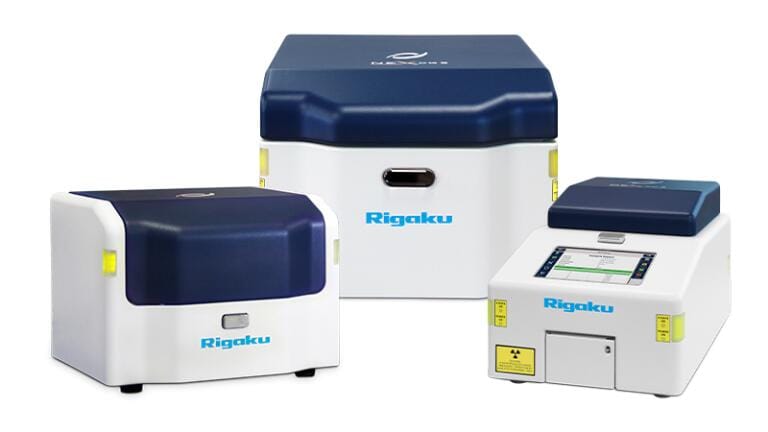
Rigaku’s benchtop EDXRF portfolio includes systems suited to different environmental laboratory requirements, from trace-level work in complex matrices to high-performance throughput needs and everyday elemental screening. This allows labs to match instrument capability to the types of samples and workflows they handle most often.
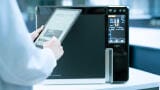
For difficult matrices or low-level contaminants, the NEX CG II Series is designed for high-sensitivity elemental analysis. These indirect excitation EDXRF systems use secondary targets and Cartesian Geometry optics to improve signal-to-noise performance and detection limits, particularly in highly scattering matrices such as soils, plant materials, and waste oils.
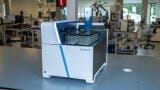
The NEX DE Series is intended for laboratories that need strong analytical performance when turnaround time and throughput is important. These direct excitation EDXRF systems use a high-powered X-ray tube and high-performance detector to support higher count rates and low limits of detection across a broad range of sample types. Additionally, the NEX DE VS model has a high-resolution camera and automated collimators to allow for precise positioning of samples to analyse 1mm, 3mm, and 10mm spot sizes. They are a good fit for high-volume analytical labs and applications requiring targeted small spot analysis.
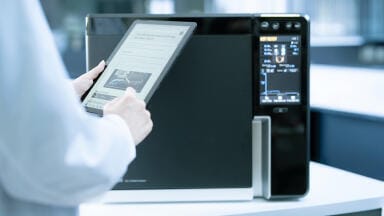
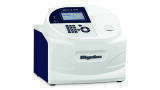
The new NEX QC II Series delivers improved performance for routine elemental analysis. As a second-generation platform, it features graphene window SDDs, optimised excitation geometry, new electronics, upgraded detector protection, and a redesigned touchscreen interface. With an embedded computer and built-in printer, it is well suited for space-limited labs and on-site testing.
IET 36.5 Sept/Oct 2026




 Product directory