PFAS analysis
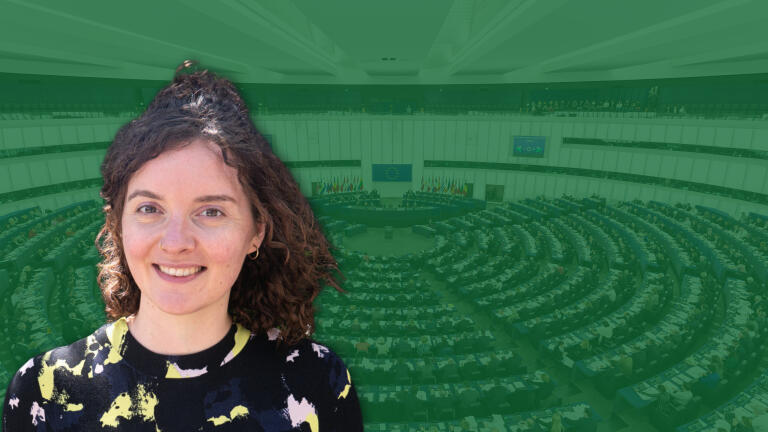
Based in Brussels, Belgium, the European Environmental Bureau is a consortium of environmental NGOs across the EU that cover issues in the water industry, promote the circular economy and track chemical pollution.
In her role as Policy Officer for Chemicals, Hermann covers the implementation of the European REACH regulation, specifically how this regulation can effectively address problematic chemicals through the restriction process.

So let’s dive right in and talk about the current state of PFAS regulation in the European Union. What are Europe’s current regulations on PFAS, and what role does monitoring play in that regulation?
As you can imagine, PFAS is quite a prominent topic at the moment. A lot of legislatures are looking at how to address it, including the EU. But we did not start addressing this group of chemicals just now. We started quite a while ago with a few individual substances from that broader group. These were addressed under the existing REACH regulation over time, and some of them were eventually moved over to the POPs regulation, the Persistent Organic Pollutants Regulation.
After recognising the concerns around so-called regrettable substitution, where regulating one chemical leads manufacturers to replace it with another with a slightly different chemical structure, we moved towards addressing whole groups of chemicals, including PFAS subgroups.
For example, we quite recently adopted the regulation of the PFHxA subgroup and certain use groups. PFAS in firefighting foams were also recently restricted in the EU. That is one of the most recent regulatory developments, alongside the ongoing discussion about addressing the whole group of PFAS under the REACH framework.
But beyond that, we are also seeing a lot of other developments emerging, because PFAS are already quite widespread in the environment and are affecting human health. There is legislation trying to address this through different frameworks. The Chemical Industry Package is a fairly recent publication from last summer in which the Commission clarifies in more detail what it wants to do on PFAS beyond the restriction process itself. It also talks about getting a better understanding of the spread of PFAS pollution in the EU and how to address it, for example through introducing a polluter-pays approach so that the burden does not fall only on society.
Apart from that, there is also a lot of sectoral legislation, for example restrictions on PFAS in toys, or in packaging and packaging waste. So there are many emerging and ongoing regulatory developments around PFAS in products and in the environment. The aim is basically to address the whole life cycle, because PFAS-related problems emerge at every stage. So a lot is going on, and if you like we can dive a bit more deeply into individual areas.
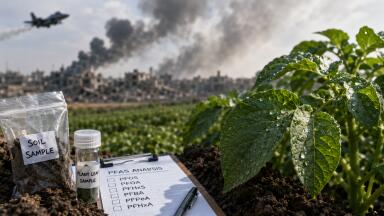
Since you specifically mentioned soil, the Soil Monitoring Law is also relevant. That file came into force at the end of last year, and it also takes a closer look at PFAS and their monitoring in soil. So yes, there is a lot going on.
When it comes to monitoring, what are the requirements and who is required to be monitoring for PFAS?
When it comes to monitoring, it plays a role in several pieces of legislation, but a lot of those requirements are still voluntary, or not binding across all types of PFAS uses, for example. Some regulations that already ask for monitoring and reporting would be those in the industrial emissions context. Even there, the whole group of PFAS is not addressed; usually it is a subgroup of specific PFAS known to be used in a given area, and it is quite a limited subset.
In some cases it is not only monitoring that is required, but also calculation where monitoring is not yet possible. So that is one area, namely point-source emissions, where monitoring already takes place.
Apart from that, the Soil Monitoring Law I just mentioned introduces monitoring of soil quality and certain soil quality descriptors, and PFAS is considered a relevant indicator for soil health. However, the question of how mandatory that will be is still under development, because the list of pollutants to be monitored is still being worked out, and member states have quite a lot of discretion in deciding where to focus and how widely to measure.
Quite recently, drinking water standards for PFAS were also introduced, making monitoring and measurement mandatory in that context. That is more on the human health side of things, because the idea is that drinking water should comply with certain concentration limits for PFAS. Member states now have to report on that.
There are also some other pieces of legislation that in future will rely more on monitoring. For example, there is discussion around Environmental Quality Standards for surface water and groundwater, where we are arguing in favour of and pushing for more monitoring of PFAS. But it may still take quite a while before those measures are introduced. So yes, monitoring has a very important role both in informing legislation and in helping to enforce it.
There are so many different sources of PFAS. In your estimation, are there any particular sources that are under-monitored or under-regulated? Are there areas where we are under-monitoring or under-researching particular sources?
Yes. I think over time we have gained a better understanding of where PFAS pollution is coming from. One project that really represented a big step forward in that understanding was the Forever Pollution Project. That was work by journalists who looked in detail at what we know about the extent of PFAS pollution in Europe. They mapped potential sources and found a very large number of sites that may be sources of PFAS.
These sites often related either to pollution we already knew about, or to typical PFAS use areas.
One source we understood relatively well was the use of PFAS in firefighting foams, and the places where those foams were mainly used, such as airports, military sites, training sites or major fire locations. These were important point sources where large quantities of PFAS entered the environment.
Another prominent source was production sites. Where there are particularly high concentrations of PFAS in the environment, we refer to these as hotspots because pollution is heavily accumulated there. We know this especially from PFAS production sites, for example in Belgium and the Netherlands, which became quite well known.
What we have not looked at as much so far are the more indirect emission sources, or emissions that arise across the life cycle. For example, fluorinated gases are also part of the wider PFAS group, or a subgroup within it, and they follow a pathway that begins in the air and then moves into water as they are washed out and deposited onto the ground.
They can, for example, break down into a short-chain PFAS called TFA. That is a source we may have ignored for too long, because we tended to allocate fluorinated gases to the climate policy field, whereas now we see TFA increasing significantly and becoming a potentially problematic source. Another problematic source is pesticides, because they can be a very direct pathway for introducing PFAS into the environment. For too long we trusted the existing pesticide authorisation system, but now we are finding that PFAS pollution is also quite widespread in more rural areas. That can be one source: pesticides breaking down into PFAS-related compounds.
These are some of the main ways we know PFAS are introduced into the environment.
Another important issue is where PFAS accumulate. Waste incineration plants and wastewater treatment sites are places where a lot of PFAS-containing materials end up, and where they may even be transformed, because treatment processes can break PFAS down into shorter-chain PFAS that are even harder to address.
The same applies to incineration. We know that PFAS are not always fully mineralised when the material is burned, so there is a chance that PFAS pollution can also concentrate around those sites.
So I think these are areas where we have not looked closely enough so far, and where regulation and monitoring definitely need to catch up.
One of the issues with PFAS is that there are so many different types, and PFAS can also change in the environment over time. How is regulation dealing with the fact that there are so many different types of PFAS and that PFAS may transform in the environment?
One major challenge, as you said, is that PFAS are very diverse. But one thing that unites them is their persistence. That is a very important aspect in understanding how to group these chemicals. As I said earlier, in the past we focused on regulating individual substances, and that led to substitution, with other chemicals replacing them that were also problematic. To address that issue, we have increasingly moved towards grouping, which is a challenging but quite effective regulatory approach. So it is important to establish what the unifying factors are, and persistence is one of them.
At the same time, PFAS display a very diverse set of properties, both in terms of the functions they provide and in terms of their behaviour in the environment. For example, we have seen a shift over time from the long-chain PFAS, the best-known substances such as PFOA and PFOS, towards shorter-chain PFAS as replacements. These shorter-chain PFAS may in some respects be less bioaccumulative, but they are often more mobile, so they are more commonly found in water. Depending on the properties of the substances, we need to address them differently.
That matters, for example, when we consider how to capture them, how to treat them, and what the most effective approaches are. But overall, we can agree in regulation that PFAS are a non-threshold issue. In other words, there is no truly safe concentration of PFAS that we should simply accept. So we really need to reduce all emissions as far as possible.
From there, we need to understand quite carefully the specific regulatory context. There is, for example, vertical regulation that is specific to particular sectors, such as food-contact materials. That area has so far had quite a clear focus on human health. So in that case we need to understand which PFAS are in the material, what properties they provide, how to address them, and what the relevance is for human health.
But we should not forget that this kind of regulation does not necessarily address environmental concerns. So we cannot rely on single regulations alone. We need a holistic approach in the EU, and that is part of what the EU has been trying to achieve with the PFAS Action Plan published some time ago. The intention is to look at the issue holistically.
What can we do about PFAS in the EU, and in which areas of regulation? We really need to get this right, and we need to do so as quickly as possible. That means we need to stop PFAS at the source, and that is what the universal restriction is intended to achieve: saying that all PFAS should be addressed under this regulation, that all emissions need to be reduced to a minimum, and that only essential uses should remain. That was the original idea in the Chemicals Strategy for Sustainability.
The restriction proposal has now become a bit looser because it has to take into account the transition to alternatives and how quickly that transition can happen. But the overall direction is still clear. We want to phase out PFAS in the EU in the future.
The other part concerns what is already in the environment. When it comes to existing pollution, we need to understand what types of PFAS contamination we already have and how to address that through remediation and treatment. We need to know what we find in soil, what we find in water and adapt our techniques accordingly. As we said, it is not a one-size-fits-all issue; techniques need to be tailored more carefully.
So regulation also needs to be adaptable to the different properties and different harmful characteristics of PFAS. But we do believe there is a way to do that. In essence, we need to mainstream PFAS into all relevant regulation wherever possible, in order to address this complex issue.
And as you mentioned, that connects directly to the tracking and monitoring of PFAS and to the techniques we need in order to do that effectively.
How do you think regulation can interact with technology, or how can technology catch up with regulation so that we can properly monitor and detect PFAS in the environment?
The field of analytical methods is a very dynamic one, particularly when there is political focus and resources are being allocated. A great deal can happen in a short period of time. We have seen that with PFAS, because as interest in the issue has increased, analytical techniques have also started to emerge and develop more rapidly.
As we have said, PFAS is a huge group, and these substances are found in very different matrices. We need to monitor them in the environment, in air, water and soil, but also in products and elsewhere. Sometimes developments in analytical methods progress hand in hand across all these areas, and sometimes they are much more specific to certain contexts, for example high concentrations versus low concentrations, or intentional versus unintentional uses. So it is really important to get the methods right across the full spectrum of PFAS.
Policy makers are particularly interested in standardised methods: clear methods, good guidance, and robust reassurance that everyone who needs to apply them and enforce the law can do so properly. We absolutely see the benefits of having clear guidance, structure and certification. But at the same time, we believe we cannot wait for all of that to be fully in place before introducing regulatory measures.
So at the moment there is a lot of interest, but also some pressure, around developing these techniques quickly enough to catch up with regulation. Over time, when regulation is introduced, we of course want to make sure it can actually be enforced and measured.
That means collaboration is really important: collaboration between institutions, scientific institutes, researchers, academics, practitioners and laboratories. We have already seen some promising approaches emerging. For example, the Commission is trying to build a public-private cooperation on the topic of monitoring, so that it can engage directly with practitioners to understand what they can already provide, where the focus currently is and what they need in order to make monitoring and regulation advance together.
Finally, you mentioned earlier the polluter-pays principle. Can you tell us a little more about what that is, how it is currently applied in European regulation where it is in effect, who is required to comply with it when it comes to PFAS, and how you think it might be developed or extended in the next few years?
Yes. The polluter-pays principle is not new. It has been discussed for decades, indeed for more than 50 years. It is also considered important from the point of view of justice and fairness when we ask who is polluting and who is paying the price. That is why it was introduced relatively early into the EU treaties.
But, as with the precautionary principle and some other concepts we are familiar with, just being mentioned in legal or policy language does not necessarily mean it is properly implemented in existing law. That is a problem, because if we really want a principle to be useful, it needs to be applied in practice.
Over time, the understanding of what the polluter-pays principle covers has also broadened. At one stage the emphasis may have been more on unlawful pollution, but over time the principle has widened to include the idea that even legally permitted pollution can still be charged for, because it still causes damage and that damage has a cost.
There are different ways the polluter-pays principle can be applied. It could be through a lump-sum payment, or on the basis of emissions, for example. There is quite a diversity of approaches, and member states have opportunities to explore them.
France is one example. It introduced a PFAS law a few years ago, and under that law it sought to introduce a fee that polluters must pay per 100 grams of PFAS they emit into the environment. Measures like that can create an incentive to minimise emissions.
At the same time, it is very important that this is not treated simply as a licence to go on polluting in exchange for paying a fee. It needs to genuinely incentivise a change in practice and an interest in moving away from pollution.
Then there is also the question of fairness. What exactly should be covered? Should it apply only to future pollution? In our view, it should ideally also apply to past pollution, because many companies have profited over long periods while also polluting over long periods. In the end, the costs still fall on affected communities, on the environment, and on municipalities that then have to clean up the damage. That is unfair, because taxpayers did not agree to the pollution and yet are left with the bill.
So ideally we should find ways to hold polluters accountable for pollution from the past, the present and the future, while still allowing companies to exist in Europe, but ideally in a way that supports the phase-out of PFAS.

Is there anything you want to add?
I am glad that PFAS is of interest to so many people, including professionals. It is very important to spread the message about where we want to go in the EU, and to understand where PFAS come from and where they appear across the life cycle, because for quite a long time that was not the main focus of the discussion. So I think it is really important to bring everyone on board.
And what is also really important is collaboration. This is such a complex issue that we need cooperation across different actors and across different kinds of knowledge. We need to bring everyone together to solve it. And it is very encouraging if monitoring and analytical methods can contribute to that by helping us better understand both the problem and the solutions.
IET 36.5 Sept/Oct 2026



 Product directory






















.jpg)