PFAS analysis
We all know the topic at hand: PFAS (per- and polyfluoroalkyl substances) are in the headlines, affecting places we know and food we eat. Their ubiquity and persistence make them a global environmental challenge. Their toxicity and potential mutagenicity make them a health concern. And their chemical diversity, coupled with constantly evolving regulatory requirements, makes them a headache for analytical laboratories.
At Da Vinci Laboratory Solutions, we see challenges as opportunities. One question we continue to ask is: can we automate sample preparation for PFAS?
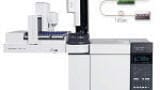
In our Cambridge, UK laboratory, Da Vinci LS combines automation from GERSTEL with analytical platforms from Agilent Technologies to meet the needs of our lab partners. A recurring problem in PFAS analysis - particularly in environmental matrices, i.e. soil and dirty water - is how to achieve low detection limits.
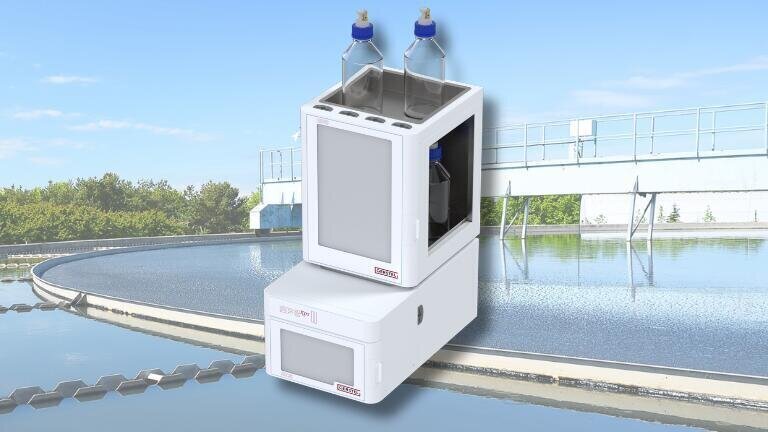
For relatively clean water samples or extracts, online solid phase extraction (SPE) offers a solution. GERSTEL SPExos II uses high-pressure weak anion-exchange cartridges to enrich liquid samples online. The entire eluate is transferred onto the analytical column, while the system performs conditioning, washing, and cartridge switching automatically between samples. This approach delivers high sensitivity without manual intervention.
Clean water represents only a fraction of real-world environmental samples. Dirty waters, complex extracts, and challenging solids introduce issues. Sampling itself presents complications: PFAS accumulate at air–water interfaces and readily adsorb to glass and plastic surfaces. Many regulated methods require bottle rinsing with solvent to ensure adequate recoveries.
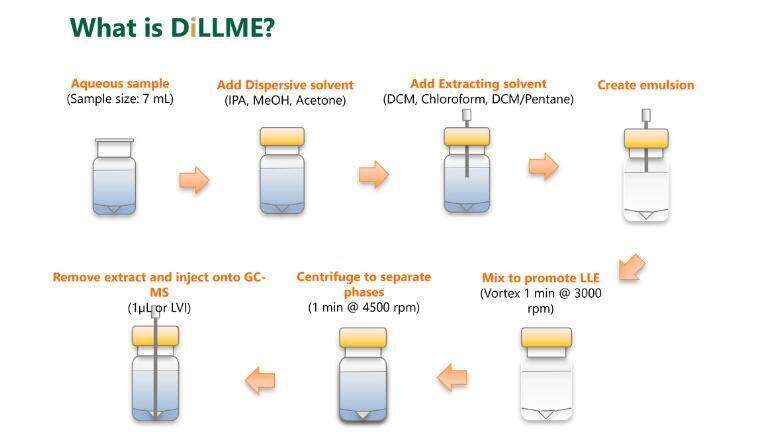
To address this, we have been exploring dispersive liquid–liquid microextraction (DLLME) as a solution. DLLME is a miniaturised extraction technique in which a disperser solvent (for example, isopropanol) is added to the aqueous sample, followed by a water-immiscible solvent. After mixing and centrifugation, analytes partition into a small phase.
Because the entire sample container is effectively washed during extraction, adsorption losses are minimized. DLLME also provides enrichment, removes inorganic components, and significantly reduces both sample volume and solvent consumption. Using the GERSTEL MPS platform, we have automated DLLME for a panel of 47 regulated PFAS compounds in our Cambridge laboratory.
The same tools can be applied here. Online SPE can be coupled to solvent extracts, including QuEChERS-based workflows, to enhance sensitivity. Importantly, effective enrichment reduces reliance on the most sensitive - and most contamination-prone - LC–MS/MS systems.
In PFAS laboratories background contamination from solvents, consumables, and instrument components remains a persistent issue. Cleaner, automated sample preparation can allow laboratories to meet regulatory limits with mid-range LC–MS platforms, reducing system maintenance and troubleshooting.
Further automation of solid preparation is achievable. Automated solvent and buffer addition, controlled mixing (orbital, vortex, wrist-action), heating or cooling, and integrated centrifugation are now routine capabilities. Downstream steps such as miniature SPE, filtration, or back-extraction can be seamlessly incorporated.
What do you think of sample prep automation? Is there a place for it in PFAS analysis? And do the solutions on the market today solve the right problems?
IET Guide 2026

 Product directory
















.jpg)
.jpg)