Water pollution monitoring
A new peer-reviewed study has found that chemicals released from vehicle tyres as they wear down are making their way into rivers, estuaries, and coastal waters—posing a growing threat to marine ecosystems.
Scientists from the University of Portsmouth discovered that even brief exposure to these compounds can significantly impair the growth of diatoms—microscopic algae that sit at the base of the marine food web and play a critical role in producing oxygen.
In controlled experiments, just four days of exposure to three tyre-derived chemicals—mercaptobenzothiazole (MBT), diphenylguanidine (DPG), and 6PPD-quinone—slowed the growth of Phaeodactylum tricornutum, a common species of diatom. These organisms are essential in converting sunlight and carbon dioxide into energy that sustains marine life, from plankton to fish.
The results raise serious concerns about the impacts of urban road runoff, especially in densely populated areas where these pollutants are more concentrated.
“Diatoms may be small, but they are ecological powerhouses,” said Dr Fran Cabada-Blanco of the University’s Institute of Marine Sciences. “They help regulate the global carbon cycle and form the base of coastal food chains. Our findings highlight the urgent need to recognize tyre wear pollution as a significant environmental issue.”
The study focused on three substances commonly used in tyre manufacturing or formed as tyres break down:
• MBT and DPG were found to be especially harmful—even at concentrations already detected in waterways across the world, including in Canada, China, and Australia.
• 6PPD-quinone, previously linked to mass salmon die-offs, required higher concentrations to affect diatoms, but remains a concern due to its persistence in the environment.
While the effects on diatoms may seem like a niche issue, scientists warn that disruption at this level can ripple upward through marine food webs, potentially impacting commercially important fish populations and coastal biodiversity.
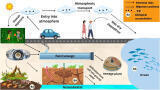
Unlike tailpipe emissions, which are regulated, tyre particles and their associated chemicals remain largely overlooked. As tyres wear down, rain can quickly wash these particles into storm drains and onward to marine environments—carrying a “chemical cocktail” that mixes with other urban pollutants.
“This is a real warning sign,” said Henry Obanya, also from the University of Portsmouth. “Tyre wear pollution is one of the largest—and most underappreciated—sources of micro-pollution in cities. It deserves the same level of attention we give to plastics and oil spills.”
The issue may intensify as the world transitions to electric vehicles. Though these vehicles reduce air pollution, they tend to be heavier than conventional cars—potentially accelerating tyre wear unless tyre designs evolve to reduce environmental harm.
The research team is calling for stronger regulation of tyre ingredients, enhanced monitoring of urban runoff, and investment in safer, eco-friendly alternatives. They also emphasise the need for more research into how tyre-related chemicals interact with other stressors in marine environments over time.
“Something as everyday as driving a car can send pollution all the way to the sea floor,” Obanya added. “We need to rethink how we manage tyre materials before more damage is done to the ecosystems that keep our oceans—and our planet—alive.”
IET 36.5 Sept/Oct 2026



 Product directory