Water pollution monitoring
This will significantly expand its capability to investigate and pursue environmental breaches by water companies.
In a joint announcement published on 11 February 2026 by the Environment Agency, Defra and Water Minister Emma Hardy MP, the regulator said it is seeking to build a tougher regulatory culture at a time when water company environmental performance has continued to decline in recent years.
The EA’s water enforcement workforce has increased almost fivefold, rising from 41 roles in 2023 to 195 by March 2026, with a further increase planned later in 2026.
The agency says the larger team of investigators, enforcement officers and lawyers will allow swifter and tougher action against environmental harm, with the aim of deterring illegal activity and helping deliver a cleaner water environment.
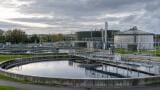
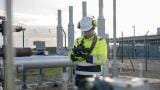
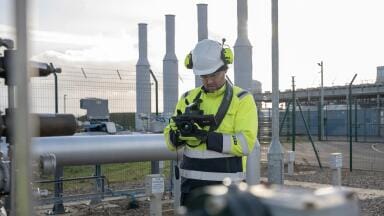
The regulator described the day-to-day role of enforcement officers as investigating suspected breaches of environmental law, including visiting water company sites to inspect equipment, collecting water and soil samples for chemical analysis and preparing evidence for courts and legal teams to support prosecutions.
The EA argues that increasing capacity in these areas enables it to respond more quickly, pursue more cases and apply a wider range of enforcement tools.
Alongside the workforce expansion, the EA highlighted inspection and enforcement activity during the 2025/26 financial year. It said more than 8,000 of the 10,000 planned water company inspections for 2025/26 had already been completed, producing over 4,700 individual improvement actions for water companies, including repairs at sewage works and infrastructure upgrades.
The agency also reported that water enforcement activity last year resulted in over £6.9 million in enforcement undertakings being paid by water companies after breaking environmental law, with the funds redirected into cleaning up waterways. It added that this suite of enforcement activity, combined with record inspection levels, has contributed to a 4% decrease in permit breaches this year after persistent underperformance across the sector.
The EA said the expansion is backed by the largest budget for water enforcement and compliance it has ever had, with a record £153 million this financial year to support the increase. It also pointed to a strengthened “polluter pays” approach under which water companies cover the costs of enforcement, including investigations, effectively shifting more of the regulatory cost burden onto the regulated sector.
Helen Wakeham, the Environment Agency’s Director for Water, said that with more specialists and enforcement teams on the ground, the EA has more resources than ever to protect waterways from pollution.
She said the agency will use a wide range of actions to hold water companies to account, from formal notices to civil penalties and prosecution, while also emphasising that enforcement is only one part of its compliance approach and that the goal is to identify and address root causes to prevent pollution.
Water Minister Emma Hardy said the additional officers and inspectors, hired under the current government, are already conducting thousands of checks on water companies, helping to protect rivers, lakes and seas and restore public confidence. She said the expanded workforce will be integral to holding water companies to account and to delivering strengthened enforcement powers, including new, automatic and tougher penalties.
The announcement also placed the workforce increase within a wider reform programme. The EA said it is transforming its enforcement approach through increased funding, additional dedicated water industry teams, stronger powers introduced through the Water (Special Measures) Act 2025, and a strategy focused on tackling the root causes of environmental harm.
The Act has already introduced new powers aimed at poor performance, including cost recovery for enforcement and prison sanctions for obstruction. Further provisions are expected to follow, including new civil penalties described as automatic penalties, statutory Pollution Incident Reduction Plans, and accelerated monitoring of all sewage overflows.
As part of a commitment to transparency, the EA also said it is publishing all Water Industry Compliance Assessment Report (CAR) forms online, intended to give the public greater visibility into how compliance is assessed and how enforcement decisions are informed. The update builds on the government’s recently launched Water White Paper, described as a once-in-a-generation plan to overhaul the water system through tougher oversight and stronger accountability for water companies.
In notes accompanying the announcement, the EA listed the three highest enforcement undertakings as awards to Gloucestershire Wildlife Trust (£600,000), Severn Rivers Trust (£550,000) and Mersey Rivers Trust (£517,000).
IET Guide 2026

 Product directory