Soil testing
Decades of high‑yield cropping and heavy fertilizer use had depleted nutrients and organic matter, leading to declining productivity and water pollution.
To address this, the government launched the Soil Health Card scheme in February 2015. Ten years on, it has become the world’s largest soil‑testing program.
A February 2025 parliamentary update notes that 24.74 crore (247 million) Soil Health Cards have been issued and ₹1,706 crore in funds disbursed.
The scheme analyses 12 key soil parameters — macronutrients (N, P, K, S), micronutrients (Zn, Fe, Cu, Mn, B), pH, electrical conductivity and organic carbon — and provides crop‑specific fertilizer recommendations for up to six crops.
Unlike many monitoring programs that remain centrally controlled, SHC relies on a network of 8,272 soil testing laboratories across India, including 1,068 static labs, 163 mobile labs, 6,376 mini-labs and 665 village‑level labs.
These labs process tens of millions of samples each biennial cycle, giving farmers unprecedented insight into their soil’s nutrient status.
A significant development in the past 18 months has been the decentralisation and digitisation of the SHC system. Village‑Level Soil Testing Labs (VLSTLs) (small facilities often run by entrepreneurs, self‑help groups and schools) were introduced in 2023.
By February 2025 665 VLSTLs had been established in 17 states. The government has also merged the SHC scheme with the Rashtriya Krishi Vikas Yojana (RKVY) to ensure sustained funding.
To improve transparency and trust, the SHC portal and mobile app now use GIS technology to geo‑tag soil sample locations.
This ensures that farmers can verify their samples were tested correctly and that results correspond to their plots.
The app automatically captures latitude and longitude, generates QR codes linking test results to the portal and sends SMS alerts when cards are ready.
By late 2024 the portal had expanded to multiple languages and five regional dialects.
Educational outreach has also grown; the School Soil Health Programme had set up over 1,000 soil labs in 1,020 schools and engaged 125,972 students, cultivating a new generation of soil stewards.
Evaluations show that data‑driven fertilizer recommendations can boost yields and cut costs.
A 2017 National Productivity Council study of 76 districts found that, before the SHC program, over 90 % of farmers had never tested their soil and 92 % were not using balanced fertilizer.
After following SHC advice, farmers reported an 8–10 % reduction in chemical fertilizer use and an overall yield increase of about 5–6 %.
A separate evaluation by the Agricultural Economics Research Centre (quoted in a 2025 commentary) suggests that over 90 % of farmers experienced higher yields and more than 70 % observed improved crop growth after using the recommendations.
The Institute of Social & Economic Change found that farmers who combined SHC‑based fertilizer advice with farmyard manure enjoyed about 24 % higher income than those who did not.
These findings underscore the economic benefits of precise soil management, especially in an era of volatile fertilizer prices.
One innovative aspect of India’s soil program is its emphasis on local capacity.
Rural women, known as Krishi Sakhis, are being trained as para‑extension workers to bridge the last‑mile gap between lab data and farm practice.
A June 2024 government briefing reported that 34,000 Krishi Sakhis had been certified out of a target of 70,000.
These women receive 56‑day training modules covering soil health, moisture conservation, integrated farming and communication skills.
Once certified, they can collect soil samples, provide advisory services and earn an average of ₹60,000–₹80,000 per year.
Meanwhile, youth and community groups run many of the 665 village‑level labs, making soil testing more accessible to farmers in remote areas.
Despite its achievements, the SHC scheme faces operational challenges.
An NDTV investigation into Madhya Pradesh, one of India’s leading farm states, found that many district soil testing labs were non‑functional due to staff shortages.
Of the 263 labs across 313 blocks, only a handful were operating, and some had machines still boxed after years.
Farmers reported submitting soil samples and never receiving results.
In some labs, technicians tested only eight of the 18 necessary nutrients because of resource constraints.
These findings highlight a key issue: building labs is not enough. Continuous investment in staffing, maintenance and quality control is crucial.
Without functioning labs, farmers revert to blanket fertilizer use, undermining the scheme’s goals.
The SHC program has created a massive demand for laboratory instruments, field kits and digital solutions.
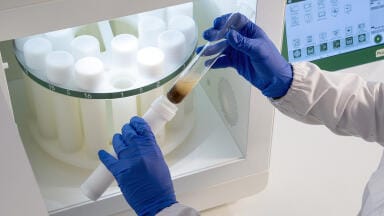
Laboratories require auto‑analysers, atomic absorption spectrometers, spectrophotometers and ion‑selective electrodes to measure nutrient concentrations.
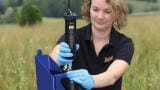
Portable mini‑labs and mobile soil‑testing vans rely on compact colorimeters, GPS devices and sample preparation units.
With tens of millions of samples collected every two years, there is scope for sensor‑based rapid testing kits that can deliver results on the spot and sync with the SHC portal.
Private agri‑tech firms are piloting lab‑on‑chip devices and AI‑enabled handheld sensors to complement traditional labs.
On the software side, the GIS‑integrated portal and mobile app call for data‑management platforms capable of handling geo‑tagged samples, ensuring secure storage and providing nutrient maps at village, block and district scales.
Consultancy opportunities abound in training programs, quality‑control audits and remote support services, given the acute human-resource constraints revealed in some states.
Integrating soil health data with yield, weather and market information could also unlock predictive analytics for farm‑management decisions.
Healthy soils are not just about yields; they are central to climate resilience.
The SHC scheme encourages farmers to maintain soil organic carbon (SOC) levels above 0.7 %, recognising that SOC enhances water retention, improves drought tolerance and sequesters carbon.
Balanced fertilization and organic amendments reduce nitrous oxide emissions and chemical runoff into groundwater.
As India pursues climate‑smart agriculture, soil‑health data can inform carbon‑credit schemes and regenerative farming programs.
The training of Krishi Sakhis and village‑level entrepreneurs in natural farming and integrated nutrient management positions them to promote practices like composting, cover cropping and biofertilizer use.
India’s Soil Health Card program demonstrates how large‑scale environmental monitoring can drive behavioural change and economic gains.
By February 2025, the scheme had delivered nearly 25 crore soil health cards and built a multi‑layered laboratory network.
Digital innovations (GIS integration, geo‑tagged sampling, QR‑coded mobile apps and open portals) are enhancing transparency and farmer engagement.
Evaluations suggest that SHC recommendations can raise yields, cut fertilizer use and increase income.
Yet the program’s success hinges on sustained investment in laboratory capacity and human resources; the Madhya Pradesh example shows how under‑resourced labs can undermine the entire effort.
For instrumentation professionals, the SHC scheme offers a glimpse into the future of environmental monitoring: decentralised labs, digital traceability, community‑based technicians and a blend of high‑tech and low‑tech tools.
It underscores that monitoring is not just a regulatory exercise but a pathway to sustainable agriculture, climate resilience and rural empowerment.
IET Guide 2026

 Product directory