Portable & field testing
Published over 12 years ago. See the latest and most current information on Portable & field testing.
A quick check of a water sample for specific contaminants? Identification of pollutants at a field site?
Traditionally, sensitive and selective identification and quantification of single substances was the realm of complex analytical instruments that only a well-equipped laboratory could afford. Analysis for such contaminants was not possible with simple and affordable instrumentation, let alone in the field.
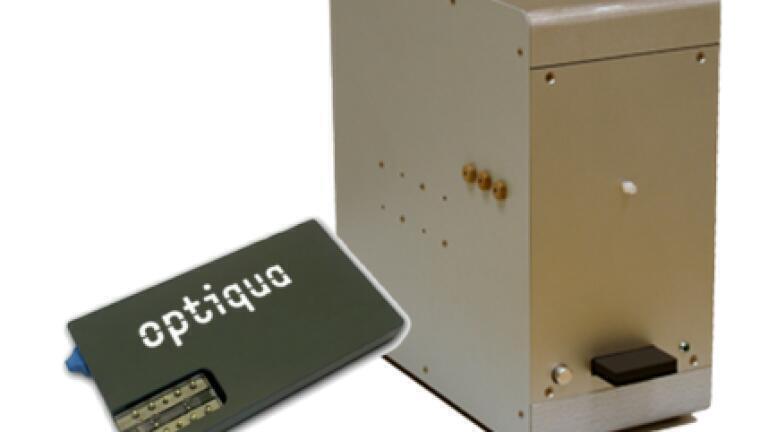
Now, Optiqua (Netherlands) introduces MiniLab, a compact sensing platform designed for simple, fast, inexpensive and reliable detection of trace chemicals. MiniLab is a platform for label-free biosensing, using a target specific optical sensor chip. Optical interferometry is used to measure minute refractive index changes at the surface of the chip which result from the binding of antibodies, and which are used to quantify the concentration of the target analyte. Typical tests include either specific pesticides, pharmaceuticals, chemical compounds or broader, chemically related, groups. Typical sensitivities are in the low ppb concentration range.
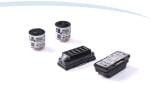
MiniLab is delivered as a complete package including a fluidics system, electronics, an optical detection system and software. The patented sensor chip is housed in a cartridge which is docked into the MiniLab. This allows quick and easy loading and unloading, and by switching between cartridges it is possible to quickly change to different target analytes. Total analysis time from sample injection to measurement result is under 10 minutes and system operation is simple, providing high accuracy analytical capabilities to scientists, operators and field technicians alike.
IET 36.5 Sept/Oct 2026


 Product directory



.jpg)