Leak detection
Published over 10 years ago. See the latest and most current information on Leak detection.
In the wake of a methane gas leak that’s been plaguing a Los Angeles suburb for months, the governor of California has finally declared a state emergency. Late last week Jerry Brown ordered that "all necessary and viable actions" be taken to plug the leak and put an end to the dangers it’s posing to local residents.
Already, over 2000 families have been forced to abandon their homes, with many reporting illnesses due to the leakage. Ailments include headaches, nausea, vomiting and trouble breathing. Despite the fact that leak was first identified in October, no action has been taken to stop the methane from seeping out into the atmosphere.
"You have kids going to school outside their neighbourhoods, families that are living in hotels" says Paula Cracium, president of the Porter Ranch Neighbourhood Council. "The longer this goes on the more stress there is."
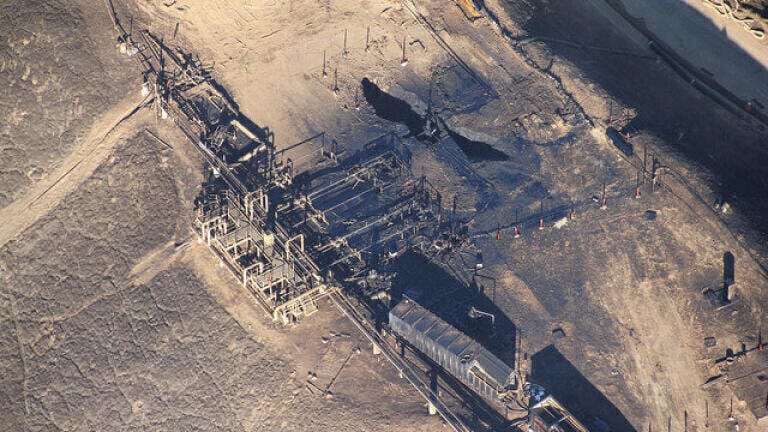
So what’s causing the leak? It’s all due to a botched storage field in Porter Ranch. The vast underground storage field has been emitting methane for months, and the greenhouse gas just keeps on coming. Now, locals and environmentalists alike have reached the end of their tether, with gas spewing out of the field so fast that the ranch now accounts for around 25% of the state’s total methane emissions. If the greenhouse gas continues to be spewed into the Los Angeles atmosphere, the impact could be catastrophic.
As the main component of natural gas, methane is a powerful element that actively traps solar radiation in the Earth’s atmosphere. While it is classified as a ‘short lived climate pollutant’ the California Air Resources Board maintains that it’s a huge threat to climate change.
"When measured in terms of how they heat the atmosphere, their impacts can be tens, hundreds, or even thousands of times greater than that of carbon dioxide," explains the board.
Meanwhile, Porter Ranch continues to maintain that the leak poses no threat to local communities. “Scientists agree natural gas is not toxic and that its odorant is harmless at the minute levels at which it is added to natural gas," says a spokesperson. It has stepped up and offered temporary accommodation to displaced residents, yet CBS news recently reported that just 2200 out of 6500 applicant families have received assistance.
Natural or not, gas detection is an integral part of safety standards within the sector. ‘Recent Advances in Gas Detection’ looks at some of the latest developments, focusing on nanotechnology, new materials, internet advancements and faster electronics.
Image via Flickr Creative Commons. Photo credits: EarthWorks
IET Guide 2026

 Product directory