Gas sensors
Published over 2 years ago. See the latest and most current information on Gas sensors.
Long-term stable gas analyses require increased zero-point stability. This requires regular adjustment of the zero point, which is usually carried out manually. This leads to increased labour costs. This problem can be solved safely and reliably with the help of an automatic zero-gas application.
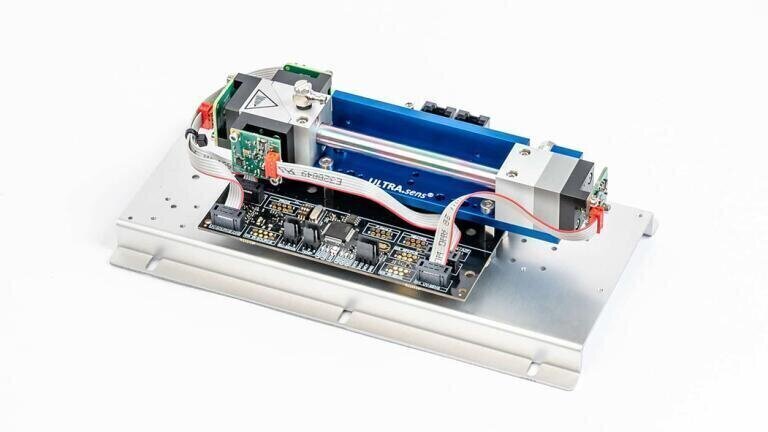
Photometric gas sensors that work based on NDIR or NDUV technology usually have integrated reference measurements to ensure long-term stability. The OEM gas measurement modules in Wi.Tec-Sensorik GmbH’s INFRA.sens® (NDIR) and ULTRA.sens® (NDUV) series also use this method to ensure zero point and end point stability. Despite these measures, the zero point can shift over a long period and must therefore be readjusted regularly. Depending on the application, this adjustment takes place in a time grid of 1 hour to >1 month. For this purpose, the gas measurement module is supplied with zero gas (nitrogen or clean ambient air) and the zero point is set manually after a stabilisation phase.
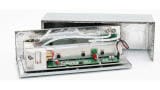
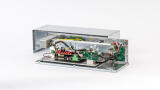
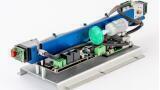
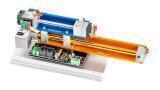
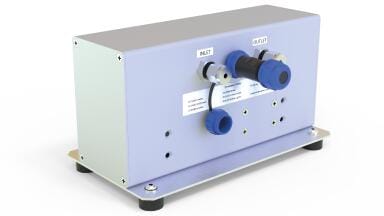
Wi.Tec-Sensorik GmbH has developed an automatic control unit (AZF auto-zero function) for this purpose, with which this zero point adjustment can be automated. The adjustment intervals of the AZF can be set by software from 1 minute to 1 month. At the start of the calibration phase, the sample gas supply is interrupted and zero gas is supplied via a solenoid valve. The purge time can also be specified via the software. After this stabilisation phase, the zero point is set automatically and the AZF then switches back to the sample gas. During this calibration phase, the last measured value is held (frozen).
IET Guide 2026

 Product directory