Gas sensors
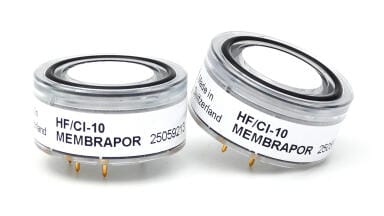
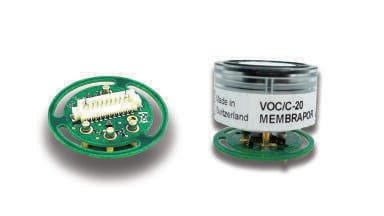
MEMBRAPOR has introduced its new Front End, a compact and cost-effective interface solution designed to simplify the integration of electrochemical gas sensors into customer applications.
Developed in response to customer demand, the Front End provides a lean, reliable and easy-to-use platform for manufacturers designing gas detection instruments, monitoring systems and other sensor-based devices. It is available for 4-, 5- and 7-series electrochemical cells and is compatible with most microcontrollers.
The Front End supports I2C communication for circuit control and sensor parameter configuration. The product manual describes hardware based on two potentiostat devices for low-power chemical sensing applications, supported by two EEPROMs that can be used to store calibration and user settings. Optional pre-calibration is also available for selected gases, helping customers reduce setup time and accelerate product development.
The platform provides analogue output voltages from two LMP channels, allowing the host system to read and process sensor signals while managing configuration through the I2C bus. This gives developers a practical interface between MEMBRAPOR electrochemical cells and the wider electronics of a gas detection instrument.
The onboard EEPROMs provide space for calibration and configuration data, while certain memory areas are reserved for manufacturer-programmed calibration data. This supports a more structured integration workflow, particularly where manufacturers need to manage sensor parameters, calibration values and application-specific settings within their own device architecture.
The manual also includes guidance for gain resistance selection and ppm calculation for three- and four-electrode operation, helping developers align front-end configuration with the intended measurement range and sensor type. This makes the product suitable not only for rapid prototyping, but also for more controlled development processes where signal conditioning and calibration behaviour must be clearly defined.
When used with the MembraSens development environment, the Front End can help shorten time to market by reducing the need to design analogue front-end circuitry from the ground up. This allows development teams to focus on system integration, software, enclosure design and application-specific performance.
For gas detection manufacturers, the benefits are practical as well as technical. Reliable sensor integration can help reduce downtime, limit unscheduled maintenance costs and support safer operation in applications where gas monitoring is critical to protecting personnel, assets and infrastructure.
| Power consumption: sensor + Front End | < 10 mW |
| Supply voltage | 3.3 V |
| Connector P1 | Molex 11 pin, 1.25 mm pitch |
| Max I2C clock frequency | 100 kHz |
| Potentiostatic circuit | 2 x LMP91000 |
IET 36.5 Sept/Oct 2026




 Product directory