Gas detection
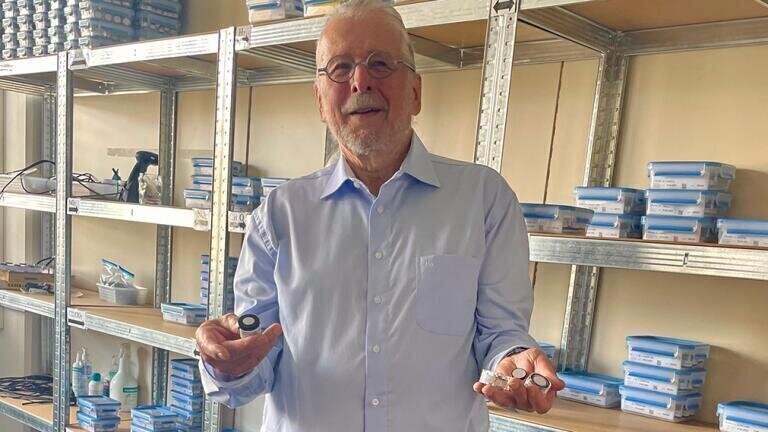
Dr. Christian Huggenberger co-founded Membrapor AG together with his wife, Ines Moretti. What began as a home-built laboratory in their apartment in Zurich’s Altstetten district has grown into an SME with more than 40 employees. This year, MEMBRAPOR celebrates its 30th anniversary and is recognized globally as a key player in high-demand sectors such as air quality monitoring, medical technology, and the semiconductor industry.
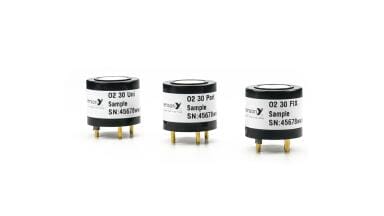
Wherever our gas sensors are in use, that’s absolutely true. We distribute high-quality sensors worldwide. They work with outstanding reliability and accuracy — and help protect human lives.
«Always try to go your own way.»
This motto has taken Dr. Christian Huggenberger a long way.
Actually, I had always dreamed of working independently — as did my wife. However, the topic of my doctoral thesis in physical chemistry wasn’t suitable for launching a startup. So I first worked as Head of R&D in the field of reprography at a mid-sized Swiss company.
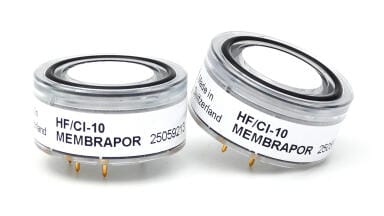
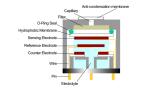
At my wife’s suggestion, I started taking an interest in electrochemical gas sensors. A Swiss manufacturer of gas detection systems was struggling with measuring ammonia gas. Through literature and patent research — and some initial kitchen-table experiments — I managed to explore this field thoroughly while still working full-time. That effort led to my first patent application in 1994 for an ammonia sensor, followed shortly by a second patent application for electrochemical gas sensors with reduced cross-sensitivity. In our small lab in Zurich Altstetten — which later became Membrapor AG — we successfully developed complex catalytic gas diffusion electrodes with high reproducibility, the heart of every electrochemical gas sensor. This formed the basis for manufacturing both conventional and novel types of sensors and acquiring customers in Switzerland and abroad. That was the starting point for the international company we are today.
We were a tiny lab and needed to acquire customers internationally in order to grow.
Some key milestones include:
2023: Certification of a fully digitalized quality management system by TÜV SÜD according to ISO 9001 and ISO 14001
1994: Patent application for an ammonia sensor
1995: Founding our own laboratory, which became Membrapor AG
2003: Expansion of our production site in Zurich-Altstetten
2003: Launch of the first 4-electrode sensors and the start of a strategic partnership with a major German equipment manufacturer
2009: Moving to our current headquarters in Wallisellen due to company growth
2017: Passing operational leadership to the next generation
Swiss products are known for their premium quality and reliability. They’re absolutely worth the price — which should not be confused with being expensive.
These types of gas sensors will continue to play an important role in the future. Regulations and safety thresholds are constantly evolving, requiring sensors to detect even smaller gas concentrations. At the same time, new industries and use cases are emerging. Staying close to the market and our customers helps us identify those trends — and aligns with our company philosophy: growth driven by our own innovation, a focus on R&D, and an unwavering commitment to product quality.
That’s still under wraps — but follow us on LinkedIn and you won’t miss any updates.
Thank you very much for the interview.
Please see more online or watch the video here.
IET Guide 2026

 Product directory