Gas sensors
Published over 2 years ago. See the latest and most current information on Gas sensors.
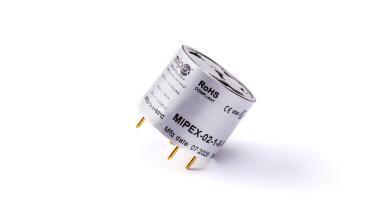
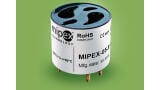
MIPEX's non-dispersive infrared (NDIR) gas sensors are trusted by industry to keep their workforces safe. These sensors are famed for their extremely low power consumption, with the MIPEX-04, for example, being up to 1,000 times more energy-efficient than its closest competitiors, lasting between 2 and 10 years on a single charge. Such market-leading efficiency was achieved without deviation from the industry-standard form factor.
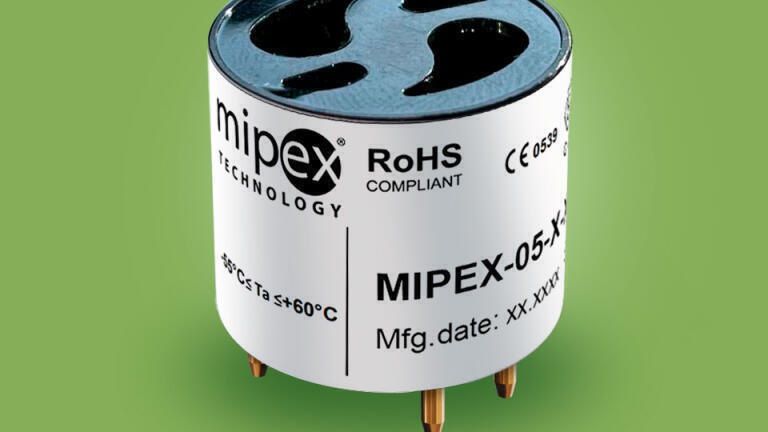
But MIPEX has done it again. Their new MIPEX-05 gas sensor for carbon dioxide, methane and propane is, once again, extremely energy-efficient, using less than 60 μA (microamperes), and unbeatably durable, all within an industry-standard unit (20.3x16.6mm). Between -60 to 60°C, the MIPEX-05 can measure methane concentrations up to 100% vol. and propane concentrations up to 20% vol; carbon dioxide can be measured up to 10% vol. when temperatures are between -20 and 50°C. It has a T90 response time of 10 seconds (without dust filter) for all three gases. To make it as easy as possible to integrate into your process, this sensor is designed to be compatible with communication protocols used in most other gas detectors, so you can use the MIPEX-05 by just plugging in the existing printed circuit board, with no need to change your hardware or software.
Engineering samples will be available in late Q2 2024.
IET Guide 2026

 Product directory