Gas detection
Published in Nature Climate Change, the study concludes that countries may be underreporting wastewater-related emissions by between 19 and 27 per cent, largely due to outdated accounting methods and incomplete system coverage.
Wastewater treatment and sanitation systems are major sources of methane (CH₄) and nitrous oxide (N₂O), both of which have far higher global warming potentials than carbon dioxide over relevant time horizons.
Yet many national inventories still rely on the 2006 guidance issued by the Intergovernmental Panel on Climate Change (IPCC), rather than incorporating methodological refinements introduced in 2019.
Those refinements include improved emission factors, updated modelling approaches and broader system boundaries that better reflect real-world sanitation infrastructure.
According to the Princeton-led team, omissions frequently include decentralised systems such as pit latrines, septic tanks, and untreated sewage discharges. These sources are particularly significant in emerging economies but are also relevant in developed countries where ageing or overloaded infrastructure can result in untreated releases.
When such sources are excluded, national totals can diverge substantially from actual emissions profiles.
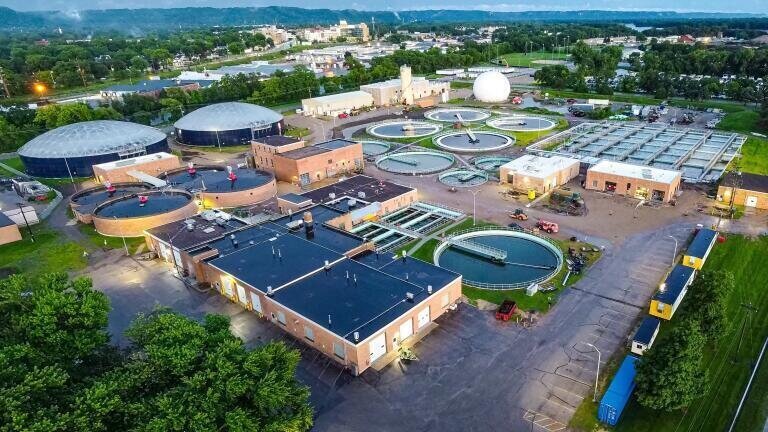
The researchers analysed inventory submissions from 38 countries across five continents, including 26 developed and 12 emerging economies. They compared reported data with updated evaluation techniques and facility-level assessments. Their findings suggest that between 94 and 150 million metric tonnes of carbon dioxide equivalent (CO₂e) per year are absent from global emissions data due to gaps in wastewater accounting alone.
On a sector-wide CO₂e basis, wastewater emissions are of the same order of magnitude as aviation or commercial shipping, yet they receive far less policy and technological attention.
In parallel field research, a Princeton team led by Professors Z. Jason Ren and Mark Zondlo conducted direct measurements at U.S. wastewater plants, highlighting the variability and intermittency of nitrous oxide emissions in particular. These findings reinforce the limitations of static emission factors and underscore the need for continuous or high-frequency monitoring approaches.
From an environmental monitoring perspective, the implications are clear. Inventory accuracy depends on measurement quality, system boundary definition and methodological transparency.
As regulatory frameworks tighten, including national net zero targets and enhanced reporting under the Paris Agreement, discrepancies of this scale can distort mitigation planning and infrastructure investment.
Wastewater systems are also long-lived assets. Treatment plants constructed today may operate for 50 years or more, locking in process configurations that determine future methane and nitrous oxide trajectories. Aeration design, sludge handling practices, nutrient removal pathways and energy recovery systems all influence emissions intensity. Without accurate baselines, optimisation strategies risk being misdirected.
The sector also presents underexplored mitigation potential. Unlike carbon dioxide emissions from combustion, wastewater emissions often arise from biological and chemical processes that can be modified through operational control, process redesign or improved capture and utilisation of biogas.
Enhanced instrumentation — including off-gas analysers, dissolved N₂O sensors, and real-time methane monitoring — can provide the data needed to move beyond default emission factors toward facility-specific quantification.
The accompanying policy paper urges the IPCC and national authorities to accelerate adoption of the 2019 refinements in inventory compilation. For instrumentation users and environmental monitoring professionals, the message is aligned: better measurement frameworks are foundational to credible climate accounting.
In a regulatory landscape increasingly defined by transparency, digital reporting and performance-based standards, wastewater emissions represent both a risk and an opportunity. Closing the inventory gap is technically feasible. The remaining challenge lies in aligning methodological guidance, national reporting systems and on-the-ground monitoring capability to reflect the true climate footprint of sanitation infrastructure.
IET Guide 2026

 Product directory