Environmental laboratory
Published over 12 years ago. See the latest and most current information on Environmental laboratory.
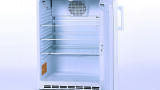
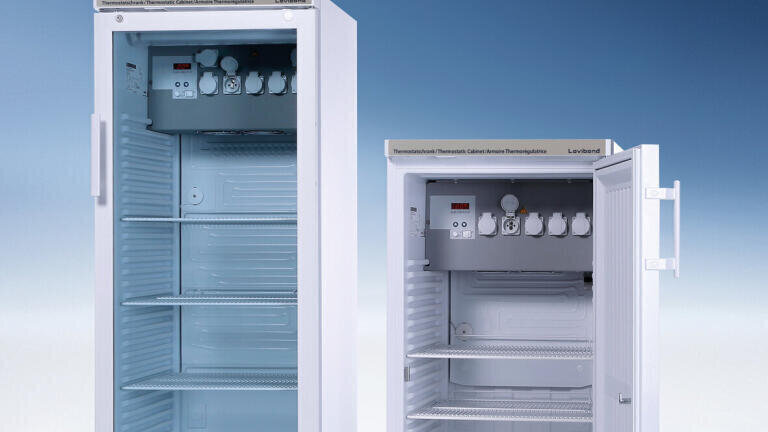
The TC series of thermostatically controlled cabinets, from Tintometer (Germany) is used for continuous temperature control over a range of 2 °C to 40 °C. This makes them ideal for a wide range of different applications in industrial and research laboratories. In particular they are ideal for the temperature-controlled storage of samples or BOD determination in effluent analysis work.
The temperature can be set in increments of 0.1 °C and an LED display shows both the set temperature and the current temperature in the cabinets. Devices such as magnetic agitators, which require a power supply, can be connected to sockets incorporated in the interior of the cabinet. The integral temperature control unit meets the requirements of the EMC directive issued as IEC 61326: “Electrical devices for measurement, monitoring and for use in laboratories“.
Improved, robust, insulated housing and highly efficient components provide maximum energy efficiency. There are 4 models available with standard doors from 135 to 445 litres net capacity, and 2 models with glass doors with 140 and 255 litres net capacity.
IET 36.5 Sept/Oct 2026





 Product directory