Environmental laboratory
Published over 12 years ago. See the latest and most current information on Environmental laboratory.
The exposure of farm animals to agricultural pesticides continues to be a major concern among food producers. For example, in the case of organochlorine pesticides, although their use has been severely restricted by many countries, they can still be detected at low levels in some agricultural products. Lipophilic pesticides, such as organochlorine and some pyrethroids, can bioaccumulate in fatty tissues, thus finding their way into animal products consumed by the public.
The current methods for extracting pesticides from meat products require the use of organic solvents, consequently resulting in the co-extraction of undesired fatty matrix interferences. Cleanup of samples is then necessary through techniques such as freezing, liquid-liquid partitioning, solid phase extraction (SPE), gel permeation chromatography (GPC) or matrix solid phase dispersion (MSPD) prior to chromatographic analysis.
In the past several years, QuEChERS, which stands for Quick, Easy, Cheap, Effective, Rugged, Safe, has become a very popular method for the extraction and cleanup of fruit, vegetable and some fatty matrices prior to pesticide residue analysis. The extraction step uses acetonitrile and a salting out effect (with magnesium sulphate). Cleanup is accomplished using dispersive SPE (dSPE), with sorbents such as:
PSA (primary-secondary amine) – for removal of polar pigments, sugars and organic acids
Carbon – for removal of chlorophyll and carotenoids
C18 – for removal of lipids and non-polar components
Typically, for reducing fatty matrix, a combination of PSA/C18 is used.6 A new cleanup sorbent, Z-Sep+, was recently developed for removal of lipids and pigments by Supelco (USA). Supel QuE Z-Sep+ is a single material consisting of zirconia and C18 bonded to the same silica particles. The zirconia acts as a Lewis acid, attracting compounds with electron donating groups, such as the -OH in mono and diglycerides, while the C18 binds fats through hydrophobic interaction.
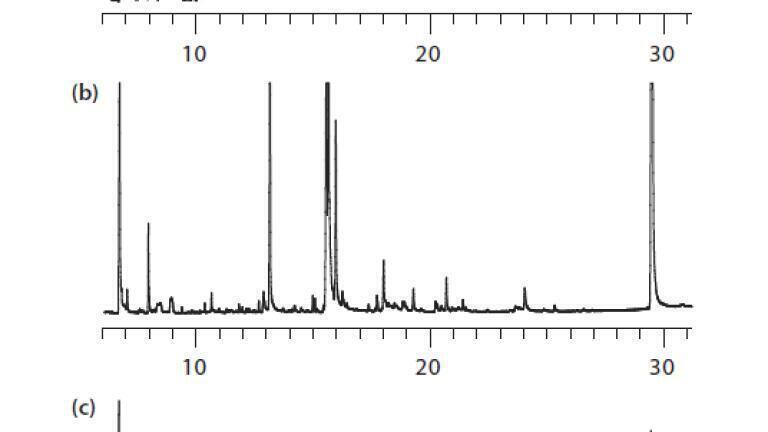
The suitability of the new cleanup sorbent, Supel QuE Z-Sep+, has been successfully demonstrated for cleanup of beef kidney matrix. It was found to effectively reduce background without significantly reducing recovery of lipophilic pesticides such as organochlorines and some pyrethroids. GC-MS full-scan data indicated Z-Sep+ was found to provide better cleanup in the form of reduced background than PSA/C18, and less interference in the GC-MS/SIM analysis of the target pesticides themselves.
IET 36.5 Sept/Oct 2026




 Product directory