Environmental laboratory
Published over 12 years ago. See the latest and most current information on Environmental laboratory.
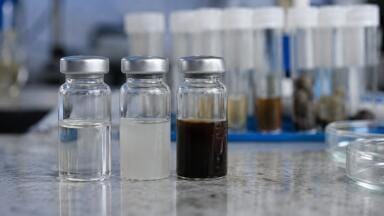
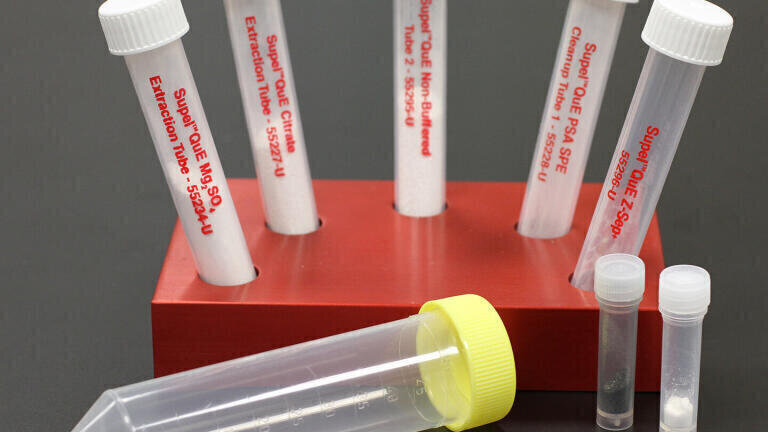
Nearly a decade ago, Steven J. Lehotay and Michelangelo Anastassiades changed the face of solid phase extraction for food analysis with the introduction of the QuEChERS approach. The “Quick, Easy, Cheap, Effective, Rugged, Safe” QuEChERS methodology involves the use of bulk salts and SPE sorbents for the extraction and cleanup of homogenised food/agricultural samples with simple mixing and centrifugation steps. Although the QuEChERS approach yields increased speed and sensitivity with decreased cost, difficult matrices often contain lipid and pigment interferences that cannot be removed by traditional QuEChERS phases.
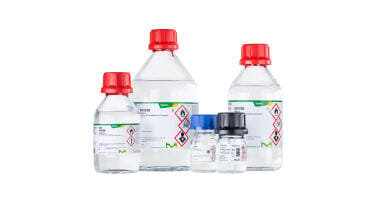
Supelco (USA), a division of Sigma-Aldrich Corporation (Nasdaq: SIAL), and a leading supplier of chromatography products for analysis and purification now offers the Supel QuE Z-Sep QuEChERS sorbents. The patented zirconia-coated silica particles of the Z-Sep sorbents selectively remove more lipid and pigment interferences from sample extracts than traditional cleanup sorbents for QuEChERS methods. By eliminating problematic matrix interferences, Z-Sep products prevent column and instrument fouling, improve limits of detection, and provide more robust LC-MS and GC-MS methods for pesticide residue, PAH, PCB, and PBDE analysis. This proprietary technology can replace C18 and PSA phases in current methods without additional method development.
IET 36.5 Sept/Oct 2026




 Product directory