Environmental laboratory
Published over 12 years ago. See the latest and most current information on Environmental laboratory.
The health benefits of avocado are associated with its high content of healthy fat, fiber, vitamins and minerals. Avocado consumption in the United States has steadily grown, with sources of the fruit being both domestic and imported. The fat content of avocado is typically in the range of 10-15%, and this can pose a special
analytical challenge when performing pesticide residue analysis. If not removed, fat compounds can interfere with analysis, resulting in elevated detection limits and contamination of LC and GC systems. The same issues can result from pigments; therefore, the effective removal of these compounds is also critical.
QuEChERS (Quick, Easy, Cheap, Effective, Rugged and Safe) has become a very popular method for the extraction and cleanup of fruit and vegetable samples prior to pesticide residue analysis. The extraction step uses a salt (such as magnesium sulphate) to drive compounds into acetonitrile, added as the extraction solvent.
Cleanup is then accomplished using dispersive SPE (dSPE) with sorbents that include: PSA (primary-secondary amine) – for removal of polar pigments, sugars, and organic acids, C18 – for removal of lipids and non-polar components and graphitised carbon black – for removal of chlorophyll and carotenoids.
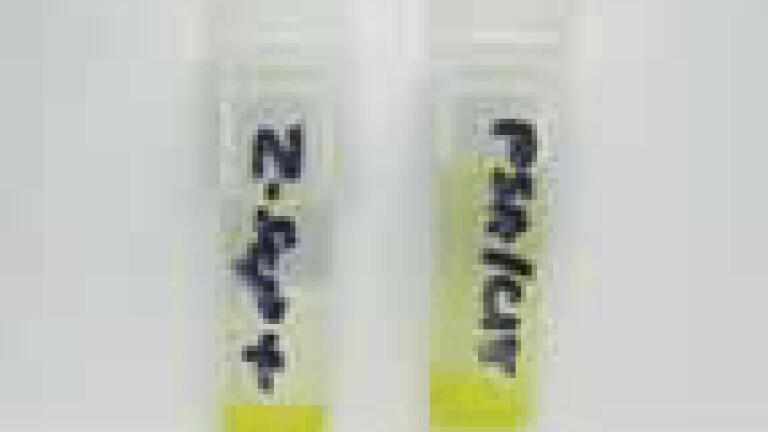
It is common to use blends of cleanup sorbents based on the interferences that need to be removed. Due to the fat content of avocado, a PSA/C18 blend is appropriate for extracts intended for pesticide analysis. Recently, a new cleanup sorbent, Supel QuE Z-Sep+, was developed by Supelco (USA). This sorbent consists of both C18 and zirconia bonded to the same silica particles. The C18 binds fats through hydrophobic interaction, while the zirconia acts as a Lewis acid, attracting compounds with electron donating groups, such as the hydroxyl (-OH) groups in mono and diglycerides.
Research shows that Z-Sep+ sorbent can be effectively used to remove fat and pigment interferences from
avocado, a high fat matrix. It was found to remove more matrix from avocado extracts than traditional PSA/C18 sorbent, and produce a lower background when analysed using GC-MS. Recoveries of
pesticides of polar and lipophilic character were good, indicating no adsorption problems for these analytes.
IET 36.5 Sept/Oct 2026





 Product directory