Environmental laboratory
Published over 16 years ago. See the latest and most current information on Environmental laboratory.
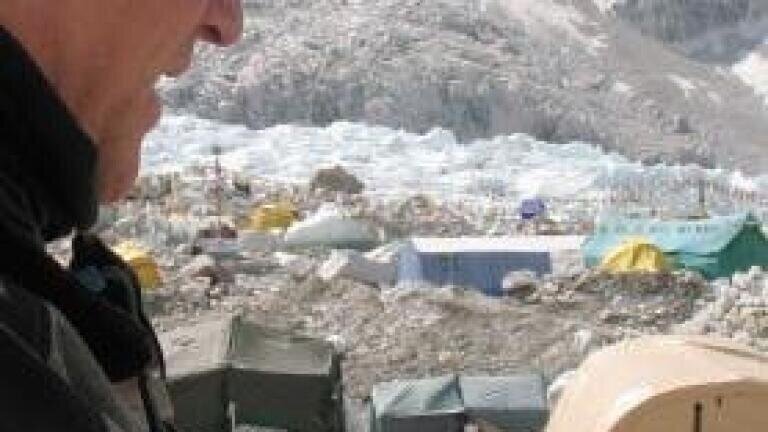
Ocean Optics (The Netherlands) recently provided a Jaz Modular Sensing Suite to the trek crew of Return to Everest 2009 – a crew including Keith Cowing, Miles O’Brien, NASA astronaut Scott Parazynski, and others – to measure solar irradiance at extreme altitude.
Jaz was utilised to determine UV intensity levels in the Everest region where levels are typically extremely high. The handheld Jaz unit that accompanied the Back to Everest 2009 group included solar irradiance scripting
language, an SD card for storage of spectra and Jaz’s lithium-ion battery.
The participants used Jaz to measure solar irradiance with a focus on UV levels at an extreme altitude. It is suggested that UV levels on Everest should be among the highest on Earth and Jaz was used to perform analysis
of the nature of the sunlight during the experiment phase of the summit. The amazing expedition was completed successfully on Monday, May 25th.
Jaz performs in a number of challenging applications-its compact, handheld design makes it ideal for fieldwork, even in challenging environments like the world’s highest mountain. Its portability was especially important for the Everest expedition as equipment had to be packed in by the climbers during the arduous ascent. The unit is also flexible enough to be configured with multiple spectrometer channels for process management, quality control and life sciences applications as well.
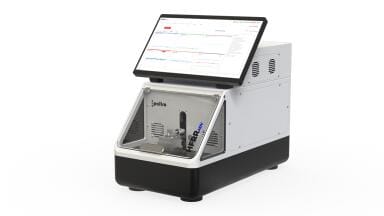
Jaz is a family of stackable, modular and autonomous components that share common electronics and communications. Included in the Jaz stack is a CCD-array spectrometer that can be optimised for a variety of radiometric measurements and a microprocessor with onboard display. Unlike traditional light meters, Jaz allows users to capture, process and store full spectra without the need for a PC. Spectral data can be transferred to a laptop or desktop PC for additional post-acquisition processing, such as calculating color temperature, spectral intensity and color space values.
IET 36.5 Sept/Oct 2026




 Product directory