
Environmental laboratory
Published over 14 years ago. See the latest and most current information on Environmental laboratory.
Horizon Technology has recently developed new methodology to extract PAH compounds using Non-Halogenated extraction solvents and C18 SPE disks in an ongoing effort to reduce total solvent disposal costs and decrease employee exposure to harmful chlorinated solvents.
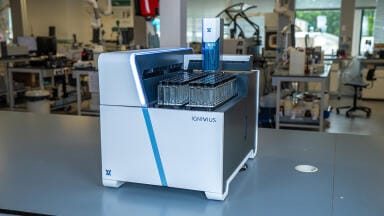
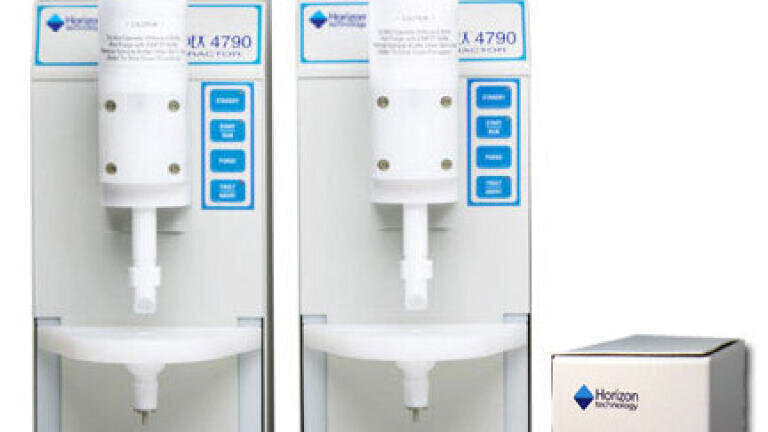
The application demonstrates automated extraction of 16 PAH compounds listed by the US Environmental Protection Agency (EPA) as priority pollutants, including all PAHs listed in the content of the EU WFD, using the Horizon SPE-DEX 4790 automated SPE disk extraction system. The note highlights the efficacy of the extraction while demonstrating excellent recoveries of PAH compounds using Hexane and minimal amounts of Acetone. Results were obtained using 47 mm Atlantic C18 SPE disks. Samples analyzed were surface-water grab samples containing dissolved PAH compounds with and without particulates. Water samples with particulates were extracted using Horizon’s unique Fast Flow Sediment Disk Holder (FFSDH) which allows the ‘whole’ sample to be extracted (including particulates and debris) without having to separately pre-filter.
Polycyclic Aromatic Hydrocarbons (PAHs) are ubiquitous environmental contaminants, naturally occurring in coal, crude oil, gasoline, and their byproducts (e.g. coal tar or creosote). In addition, PAHs are formed in the incomplete combustion processes of all organic materials, such as wood or fossil fuels. Consequently, the EU water framework directive (WFD) lists in its annex X the whole group of PAHs as priority hazardous substances [1]. Traditional extraction solvents used for solid phase extraction (SPE) methods involving PAH compounds are dichloromethane (DCM) and acetone. DCM has been used in the past because of its excellent solvating properties and its low boiling point which results in higher yields after extraction, drying, and concentration. However, DCM is a known carcinogen even at very low exposure levels. As such, many laboratories have now mandated that solvent extractions in environmental methods not use any halogenated solvents, in particular DCM.
Click here to learn more…
IET 36.5 Sept/Oct 2026



 Product directory