Environmental laboratory
Published over 14 years ago. See the latest and most current information on Environmental laboratory.
FLIR Advanced Thermal Solutions (ATS) has announced a new applications report that describes how Linköping, Sweden, based company Termisk Systemteknik has developed an aircraft based system using a FLIR SC7600 thermal imaging camera to effectively monitor and maintain local district heating networks.
District heating is a system for distributing heat generated in a centralised location for residential and commercial heating. Hot water or steam is distributed to households and companies through an underground network of pipes. District heating can potentially help to reduce a city's carbon footprint by increasing the efficiency of heating systems throughout the entire city. According to some researchers district heating is the cheapest method for a city to cut on carbon emissions. But maintaining a large district heating network can be a difficult task.
In Scandinavia district heating systems have been installed in many of the larger cities. But a significant portion of the district heating infrastructure is quite old. Old pipes tend to degenerate over time due to corrosion and will eventually start to leak. The exact numbers may vary but each year - Swedish companies lose several million cubic meters of water. This constitutes not only a large financial loss, but also a loss to the environment as well.
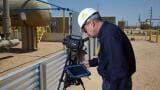
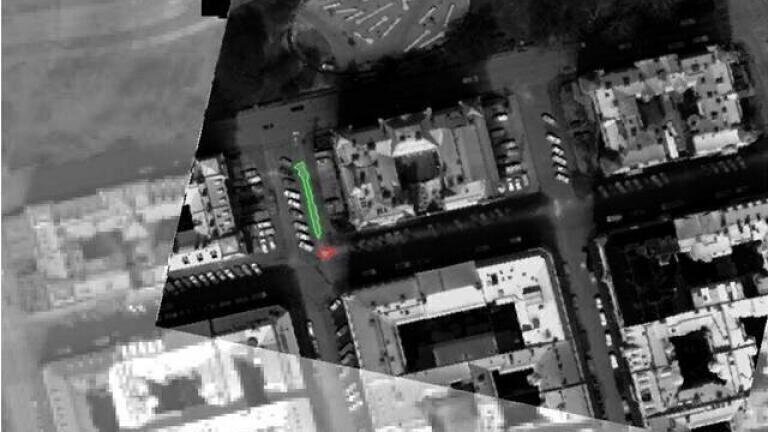
Finding these leaks with conventional means is quite difficult. To solve this problem the thermography experts at Termisk Systemteknik mounted a FLIR SC7600 on the bottom of a small plane. By flying over the city and recording the thermal images, a thermal map is produced of the entire city on which district heating leaks can be detected and located. An automatic detection system was used on the thermal data to automatically point out leaks and other issues to the district heat maintenance teams.
The FLIR SC7600 thermal imaging camera that was used for the district heating monitoring system contains a cooled Indium Antimonide (InSb) infrared detector that produces thermal images with a resolution of 640 x 512 pixels at a thermal sensitivity of 20mK (0.02 °C). The FLIR SC7600 proved especially useful for this application because of its high frame rate and short integration time. The camera was able to capture full resolution thermal images at a frame rate of 100 Hz. Such high speed acquisition and short integration time proved indispensible when flying over a city at moderate speed whilst capturing sharp and clear thermal images.
IET 36.5 Sept/Oct 2026





 Product directory