Environmental laboratory
Published over 15 years ago. See the latest and most current information on Environmental laboratory.
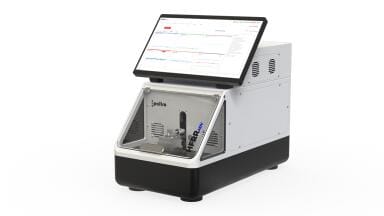
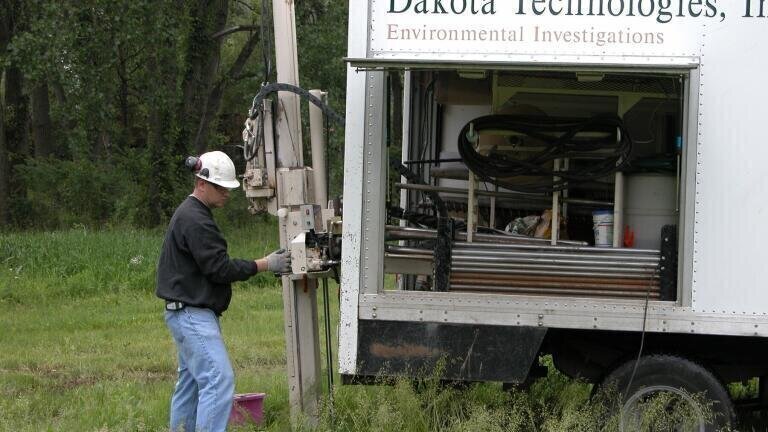
Dakota Technologies (USA) offers the UVOST®, a direct-push delivered sensor that allows rapid screening of most petroleum-based light non-aqueous phase liquids (LNAPLs). This tool uses laser-induced fluorescence (LIF) technology to immediately detect sub-surface contamination without having to draw samples or wait for lab results.
The UVOST responds exclusively to source term NAPL, free of interference from dissolved phase hydrocarbons, and it is ideal for detecting fuels, lubricants, and crude oils. The system is designed for use with all direct-push platforms such as Geoprobe®, AMS PowerProbe®, and cone penetrometers.
When deployed, the UVOST’s probe uses ultra-violet laser light and a sapphire-windowed sensor to detect the polycyclic aromatic hydrocarbons (PAHs) that are found in petroleum LNAPL. As the probe is driven into the ground, the LNAPL’s fluorescence signal is sent through a fiber-optic cable to a detector and logged by a laptop computer, so results can be seen in real time, and on-site personnel can begin determining an ideal location for the next probing location. In a typical day 250 to 500 feet of continuous logging can be performed.
IET 36.5 Sept/Oct 2026


 Product directory