Environmental laboratory
Published over 11 years ago. See the latest and most current information on Environmental laboratory.
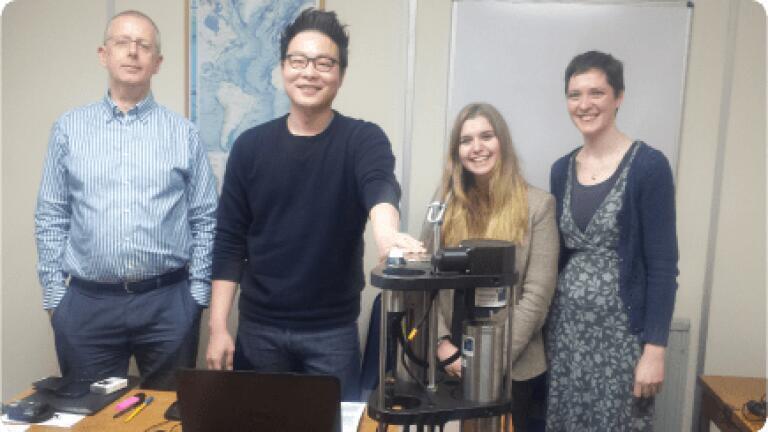
Chelsea Technologies Group (UK) are delighted to announce that CTG's representation Mr Jung Ju Kim from Tae Kwang Electronics Corporation, Korea, successfully completed training on the FastOcean APD Profiling System. The training was led by CTG's Principal Scientist Dr Kevin Oxborough with assistance from Dr Cathy Rushworth (Scientist) and Katie Davage (Sales Manager).
FastOcean APD is a multi-wavelength Fast Repetition Rate fluorometer system for in situ estimation of gross primary productivity (GPP). It is the tool of choice for monitoring variable chlorophyll fluorescence in photosynthetic organisms. This autonomous profiling system comprises two FastOcean multi-wavelength Fast Repetition Rate fluorometers (ambient plus dark), pumped dark chamber, programmable battery pack and a PAR sensor for autonomous, in situ estimation of gross primary production.
This system is smaller, lighter and more power efficient than earlier FRRf profiling systems. This high performance system is suitable for use in a wide range of applications from the assessment of primary production within the world's oceans to environmental monitoring within reservoirs and rivers.
See the FastOcean APD system in action onboard RV Callista at Ocean Business
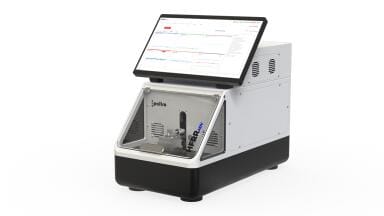
A demonstration of the FastOcean APD system for probing phytoplankton photosynthesisis will be held during Ocean Business (14 April 2015 on board RV Callista). Attendees will also have the opportunity to be the first group to see the new laboratory based Act2 system which, combined with a FastOcean sensor, can be used to run fully automated fluorescence light curves, track diurnal changes in Photosystem II (PSII) function and probe PSII photochemistry during nutrient limitation. If you would like to reserve a place at this free demonstration, please contact Ellen Keegan at CTG.
IET 36.5 Sept/Oct 2026


 Product directory