Environmental laboratory
Published over 16 years ago. See the latest and most current information on Environmental laboratory.
Campbell Scientific (UK) have added two ice sensors to their range of meteorological instruments. Both sensors are for use in the detection and warning of icing due to freezing rain, sometimes referred to as an ice storm.
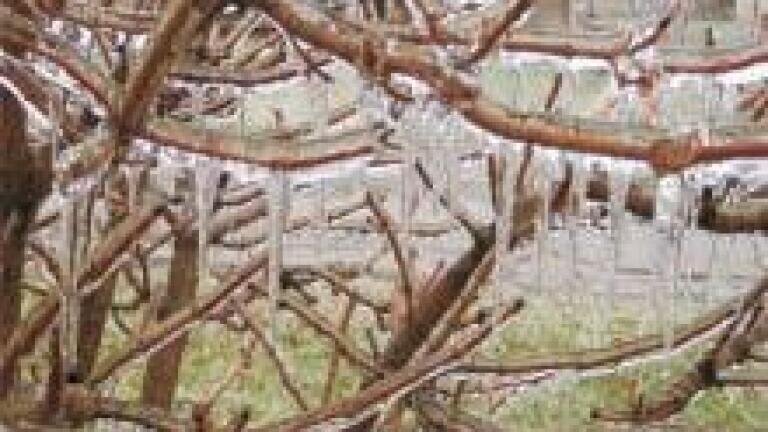
Freezing rain occurs when rain falls through a layer of very cold air in the lower atmosphere supercooling the liquid which freezes instantly on contact with the ground or any surface at or below zero. Surfaces quickly become coated in ice called a glaze. Unlike snow which can be dispersed, glaze forms as a solid immoveable sheet which is virtually friction free and highly dangerous for road, runways and railway tracks.
When glaze forms on power cables, telephone wires or the pylons which support them then the extra weight can cause serious problems breaking connections or damaging cables. Trees are similarly affected with large branches snapping off under the excess weight causing damage, injury or disruption.
The two new sensors, manufactured by Goodrich, differ in that the lower cost 0871LH1 provides a warning that icing is occurring whilst the more expensive 0872E3 provides a measurement of the duration and intensity of such as event. Both sensors feature de-icing technologies to shed ice from the sensors once a event has been recorded so that they can then continue to monitor.
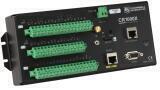
Both sensors connect directly to any Campbell Scientific data logger or can be integrated into a Campbell weather station. Typical applications include road and rail weather systems, aviation weather observation systems
(AWOS), power and communication network integrity, cable cars and funicular railways, and weather and climate research.
IET 36.5 Sept/Oct 2026



 Product directory