Environmental laboratory
Published over 9 years ago. See the latest and most current information on Environmental laboratory.
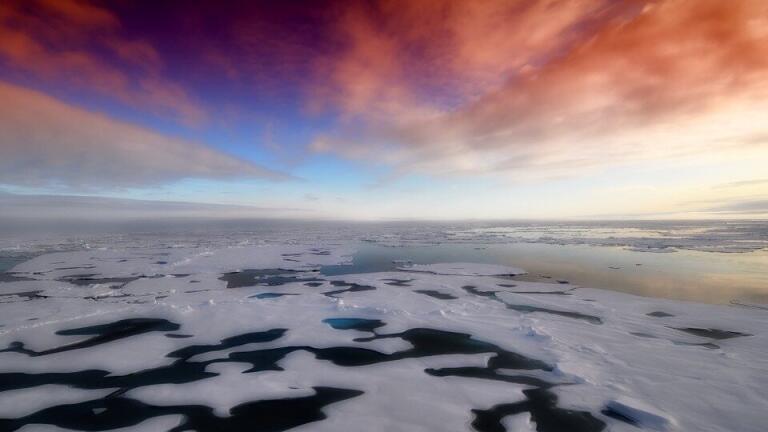
Researchers from the Max Planck Institute for Meteorology and the US National Snow and Ice Data Centre have worked together to provide the first estimate of when the ice covering the North Pole will thaw completely – and the result is not encouraging.
Dr Dirk Notz and Dr Julienne Stroeve estimated how much ice is melted with the release of a single tonne of carbon dioxide (CO2) into the atmosphere, then extrapolated this data to cover the whole of the Arctic Sea Ice. Their measurements concluded that the ice will be completely gone by 2045.
Satellites first began measuring the amount of ice in the Arctic Ocean in 1979, and this graph charting its movement over the intervening 37 years shows a definite drop-off in terms of total amount. However, the remote and inclement conditions in the Arctic have made it difficult to ascertain how quickly this has been happening and how it will continue.
Despite these obstacles, Dr Notz and Dr Stroeve managed to determine that every tonne of CO2 released into the atmosphere contributes directly to the melting of 3m2 of ice in the Arctic. For reference, the average EU citizen is responsible for the thawing of 20m2 of ice every year, while Americans individually release enough CO2 to melt 50m2.
Globally, we emit around 36 billion tonnes of CO2 on an annual basis. By matching that figure against the total amount of ice remaining in the Arctic, Dr Notz and Dr Stroeve concluded that we can afford to emit one trillion tonnes of CO2 before the ice is gone completely. At current rates, that is projected to happen by 2045.
If the Arctic really is doomed, what does this spell for our planet? Directly, a huge number of animals will have their habitats and ecosystems disrupted, threatening their survival as a species. Indirectly, the melting of the ice will become a catalyst for further climate change, since greenhouse gases (GHGs) trapped in the ice will be released into the atmosphere.
What’s more, global warming will actually be hastened since water absorbs far more heat than ice. Therefore, we can expect elevated temperatures around the world (not just in the Arctic) and a problem that snowballs quickly out of control (excuse the pun).
Finally, and perhaps most importantly, the water released in the thawing of the ice would flood lower-lying towns and cities around the globe, with certain islands (especially in Polynesia and Micronesia) being submerged completely.
Clearly, the removal of Arctic Sea Ice is an unattractive scenario whichever way you look at it. Unless we curb our polluting habits and take immediate action to reduce our carbon footprint, it’s one that could become a reality within the foreseeable future.
IET 36.5 Sept/Oct 2026





 Product directory