Environmental laboratory
Published over 14 years ago. See the latest and most current information on Environmental laboratory.
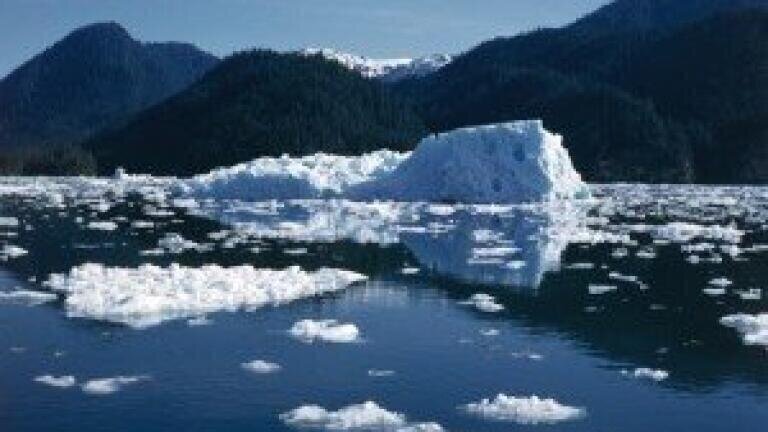
A US and China-based team of scientists have reported that the progressive shrinking of Arctic sea ice is bringing colder, snowier winters to the UK, Europe, North America and China.
The area covered by ice is gradually being reduced in the Arctic Ocean as global temperatures rise. A causal relationship has been discovered between this deterioration and cold winter weather in Europe.
Writing in Proceedings of the National Academy of Sciences (PNAS), the team have yet to discover whether winter conditions will continue to get colder as ice melts further. There is a marked deterioration in ice cover between the summers of 2006 and 2007, according to the US National Snow and Ice Data Center (NSIDC), which reflect on cold winters around Europe in preceding years.
Through observations and computer modelling, the team has also been able to elucidate the mechanisms involved. Lead author Dr Jiping Liu from Georgia Institute of Technology in Atlanta, US, told the BBC: "For the past four winters, for much of the northern US, east Asia and Europe, we had this persistent above-normal snow cover."
"We don't see a predictive relationship with any of the other factors that have been proposed, such as El Nino; but for sea ice, we do see a predictive relationship."
Posted by Joseph Hutton
IET 36.5 Sept/Oct 2026





 Product directory