Environmental laboratory
Published over 14 years ago. See the latest and most current information on Environmental laboratory.
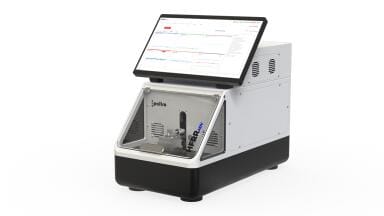
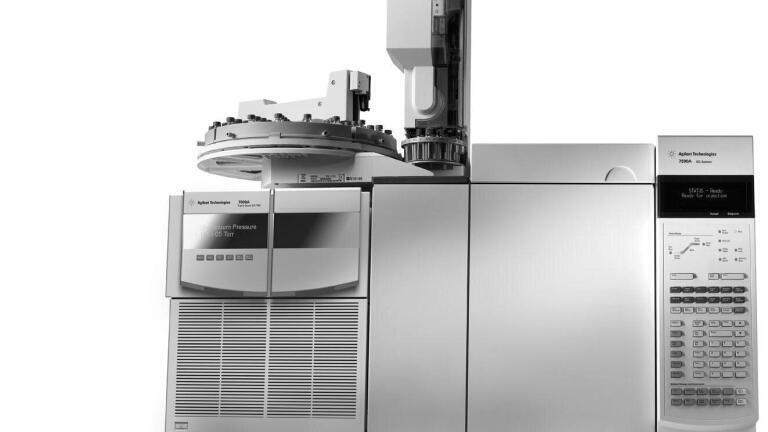
Agilent Technologies (USA) announces that it is replacing the signal-to-noise specification with a new instrument detection limit specification for its 7000B triple quadrupole gas chromatography/mass spectrometry system.
“Twenty or even 10 years ago, signal-to-noise was a reasonable indicator of GC/MS performance,” said Terry Sheehan, Ph.D., Agilent GC/MS marketing manager, “ but GC/MS/MS baseline noise for simple standards is often too low and too inconsistent to be meaningful. Selection of different baseline segments can change the signal-to-noise ratio by five or even tenfold. Our new specification, the instrument detection limit, is based on the system’s precision, and precision directly correlates with ion count – the real measure of MS sensitivity.”
Agilent considers IDL a better measure of GC/MS/MS performance because it follows the guidelines of the International Union of Pure and Applied Chemistry, the United States Environmental Protection Agency and many other organisations.
IDL calculates typical performance from a series of automated injections for an accurate view of system performance. The well-established Student’s t-test is applied to eight consecutive injections of 100 fg OFN using a 99 percent confidence interval. Additionally, the IDL specification confirms the performance of every component in the GC/MS/MS system, from the autosampler through the detector.
IET 36.5 Sept/Oct 2026




 Product directory