Drinking water
Published over 7 years ago. See the latest and most current information on Drinking water.
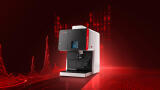
High throughput, fast analysis times and low detection limits: Analytik Jena has optimised its ICP-MS (inductively coupled plasma mass spectrometer) solutions for the requirements of routine drinking water analysis. The PlasmaQuant MS series offers optimal performance in throughput and analysis time without sacrificing precision.
The ICP-MS systems of the PlasmaQuant MS series analyze 60 drinking water samples per hour for 21 elements, with an average standard deviation of only 1.5%. When throughput increases to 82 samples per hour, the rate is still highly precise at 2.2%. This means that the instruments are considerably more precise than prescribed by the European Council Directive 98/83/EC for the analysis of drinking water or the US Environmental Protection Agency (EPA) Method 200.8.
Moreover, the PlasmaQuant MS series is very economical in daily operation. For comparison, the ICP-MS needs only half the amount of argon than any other instruments on the market requires.. The combination of detection power, speed, reduced argon usage and high throughput contributes to its lowest costs per sample for routine drinking water analysis.
ICP mass spectrometers are often the instruments of choice for the analysis of drinking water since they can define many elements simultaneously and precisely. However, laboratories are being confronted with an increasing number of samples. Analysis times must be shortened so that the flood of samples can be managed. With conventional ICP instruments, shorter analysis times mean a drop in precision, which reduces the quality of the analyses. Laboratories manage this challenge with ICP-MS solutions from Analytik Jena.
IET 36.5 Sept/Oct 2026


 Product directory




.jpg)