Air quality monitoring
A new study from Kingston University suggests that affordable, AI-driven air pollution sensors could revolutionize the way we monitor air quality, offering more accurate and accessible data about pollution levels in local areas.
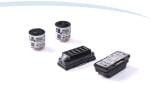
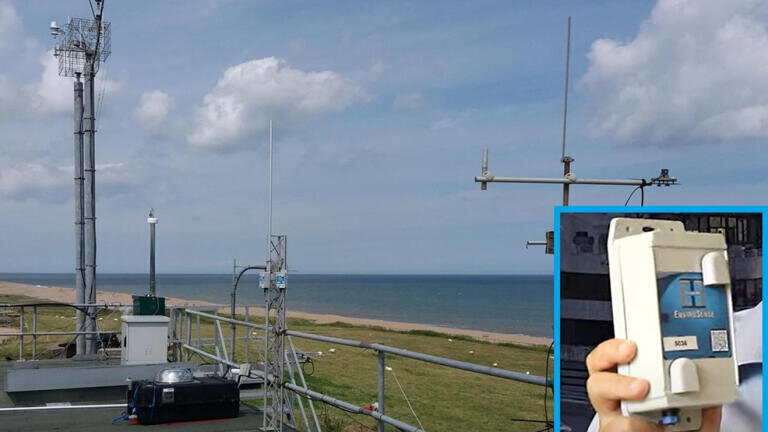
The research, published in Sensors journal by MDPI, investigates how integrating artificial intelligence with compact, cost-effective electrochemical sensors could improve the precision of air quality monitoring. These portable devices—roughly the size of a mobile phone—provide real-time, on-the-ground air quality measurements that can be taken anywhere.
Current air quality monitoring systems are costly, immobile, and too sparse to give accurate readings of the air quality in specific locations. As a result, data from the nearest stationary station may not reflect the conditions people experience in their immediate environment. Air pollution is responsible for seven million deaths globally each year, according to the World Health Organization, with children particularly vulnerable due to their developing lungs, weaker immune systems, and higher breathing rates.
The project began with internal funding from Kingston University, followed by support from Innovate UK and the UK Shared Prosperity Fund. The university worked in collaboration with Technocomm Consulting Ltd, a network communications and sensor specialist, to develop the affordable air pollution sensor, EnviroSense.
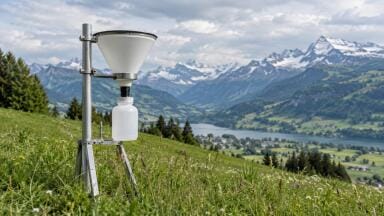
Kingston’s team examined how environmental factors and the presence of various gases impacted the sensors' accuracy. To do this, they co-located the AI-powered sensors with those at the high-precision Weybourne Atmospheric Observatory on the North Norfolk coast, a site known for its varied pollution levels, driven by winds from heavily polluted areas such as London and the Midlands.
Between May and August 2024, the research team collected data from both the portable sensors and the larger, stationary monitoring station. They focused on measuring levels of carbon monoxide (CO), carbon dioxide (CO2), and ozone (O3) every 30 minutes, while also tracking weather conditions to better understand the relationships between different pollutants and environmental factors.
This data was fed into AI models, which reduced inaccuracies by up to 46%, showing how machine learning could turn relatively simple, inexpensive sensors into powerful tools for air quality monitoring. The study demonstrated that these AI-enhanced sensors could deliver highly accurate air quality information that could help communities take action for cleaner air.
Professor Jean-Christophe Nebel, Director of Kingston University’s Knowledge Exchange and Research Institute for Cyber, Engineering, and Digital Technologies, highlighted the broader impact of the study. "This research shows that portable AI-powered sensors can deliver data accurate enough to make a real difference. It could inform public policy, lead to local emergency responses, and ultimately improve health outcomes," he said. “Our vision is for these sensors to be deployed on buses or waste collection vehicles in every neighbourhood, providing residents with real-time, localized air quality data.”
Dr. Farzana Rahman, senior lecturer and principal investigator in Data Science, emphasized the importance of the study in tackling a pressing public health issue. "These AI-powered sensors have revolutionized air quality monitoring, making it more accurate and accessible than ever before. This collaboration sets the stage for future breakthroughs and impactful partnerships," she said.
Bijan Mohandes, Managing Director of Technocomm Consulting Ltd, credited the success of the project to the close collaboration between the university and his company. "The constant communication and teamwork were essential in delivering the project on schedule," he said. "This research shows that machine learning and AI have a key role to play in improving the accuracy of electrochemical sensors."
Further research is underway, in partnership with Rey Juan Carlos University in Madrid and a university in Kuala Lumpur, Malaysia, to deploy these affordable sensors in different climates. The data gathered will help test the sensors' and AI models' effectiveness in varied environmental conditions.
IET 36.5 Sept/Oct 2026


 Product directory