Air quality monitoring
Published over 2 years ago. See the latest and most current information on Air quality monitoring.
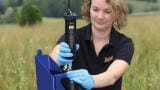
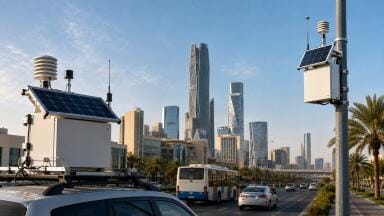
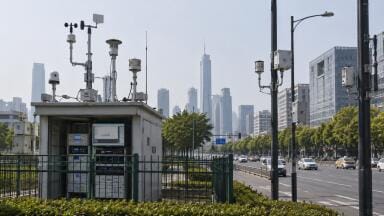
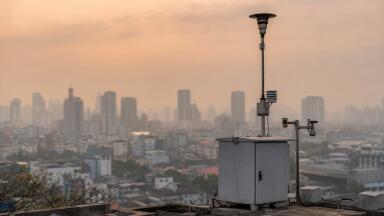
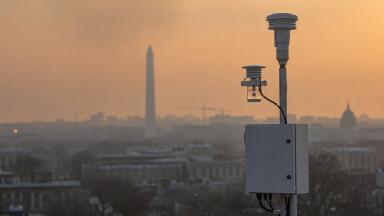
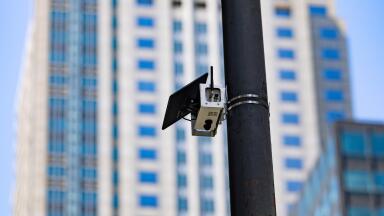
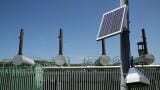
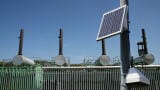
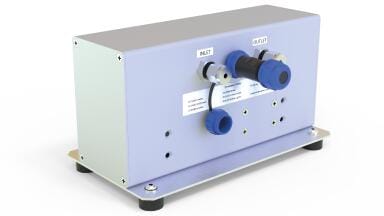
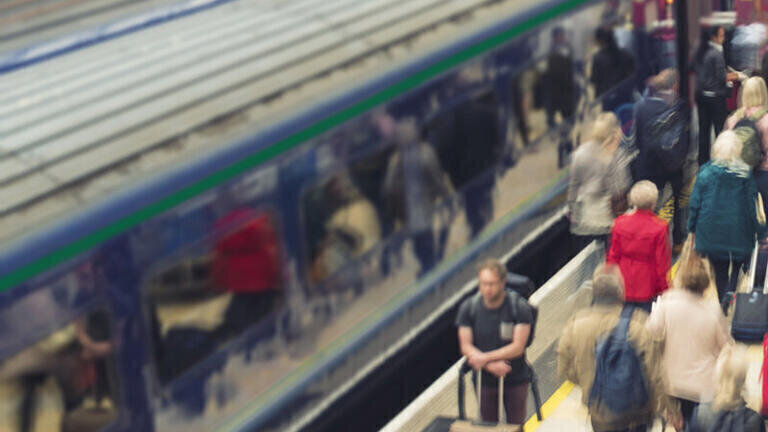
A UK train operator is carrying out an air quality baselining project at various points around some of the stations it manages. Monitoring using diffusion tubes or passive sampling has been used around rail infrastructure but the aim here is to use near real-time hyperlocal monitoring to show how pollution levels vary minute-by-minute and across spaces accessible by rail passengers. The company has invested in AQMesh small sensor air quality monitoring pods, which are designed to be easily installed on a post or barrier. This follows a similar project with 10 pods which another UK train operator has been running since the beginning of 2020.
The six AQMesh pods measure particulate matter (PM1, PM2.5, PM4, PM10, total particle count) and six gases (NO, NO2, O3, CO, SO2, CO2) as well as temperature and humidity, and were installed in early 2023. Measurements are made every one to 15 minutes, depending on settings, and sent wirelessly to a secure cloud server, where they can be accessed by staff logging into an online application.
The monitoring positions have been chosen according to known risk factors, including topography, which affects air circulation and how air pollution can become trapped and concentrated or dispersed and diluted. Selection of locations for installation of monitoring equipment also considers the extent to which spaces are visited by diesel-powered locomotives, the degree to which the space is enclosed and whether the platform is end-of-line, where idling could occur.
The various air pollutant levels vary across locations and by time of day, influenced by rail activity as well as other factors, such as wind speed and direction and other local air pollution sources, such as road traffic near stations. Techniques can be used to understand sources and indicate pollution levels from different sources, but recent rail strikes, which have reduced rail activity to zero at times, have provided further clarification.
This project is not intended to provide comprehensive monitoring around all stations. The goal is to get a better understanding of how – and why - air quality varies across the spaces managed by the train operator, informing future strategy.
Visit the website for more information.
IET Guide 2026

 Product directory