Air quality monitoring
Published over 4 years ago. See the latest and most current information on Air quality monitoring.
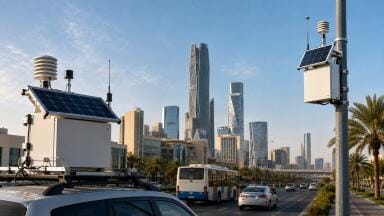
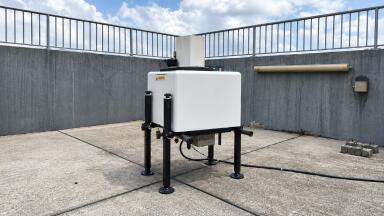
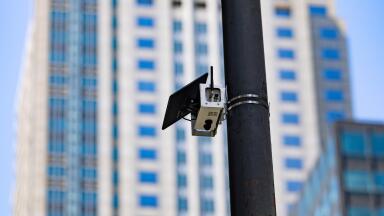
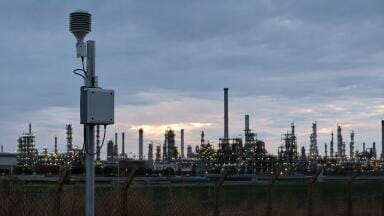
A recent study using a network of five AQMesh pods has found that small sensor systems with a properly managed QA/QC process offer valuable air quality measurements, complementing data from expensive reference equipment. Networks of small monitoring nodes, such as AQMesh, can be easily installed in local areas to identify pollution sources and expand the scope and understanding of air pollution across a city.
Following on from the initial deployment of the five pods across Kitchener, Canada, in 2020, the team leading the project have now published their paper outlining the initial results of this study.
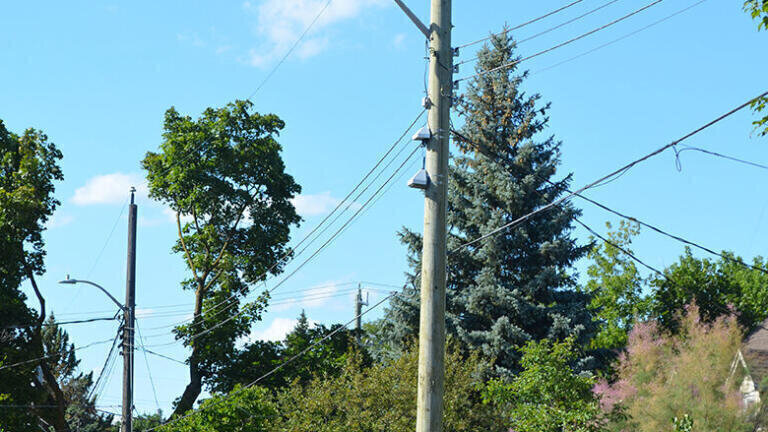
The five AQMesh pods were installed near elementary schools, supplementing the city’s only reference station, in order to demonstrate how pollution varies over short distances. Data from the pods highlighted the need for city-wide networks of small sensor air quality monitoring systems to build a more accurate picture of local pollution levels.
As part of the AQMesh team’s development into improving QA/QC methods for air quality monitoring networks, a network comparison method was used to put the pods through a rigorous QA/QC process. Data from the pods was validated through pod-to-pod comparison, while also providing traceability back to the reference instrument. The process works on the principle of identifying and separating local pollution events, leaving just the regional pollution which all pods and reference equipment respond to. This then provides a comparable data set for scaling via linear regression analysis.
Based on the confidence built by the QA/QC process, data from the pods indicated that levels of nitric oxide (NO), nitrogen dioxide (NO2), ground level ozone (O3) and fine particle matter (PM2.5) were mostly traffic related. Project leader, Dr. Hind Al-Abadleh, from Wilfrid Laurier University, hopes knowledge of how this source affects pollution levels in Kitchener will help speed up the electrification of the city’s transit system as well as encourage parents and carers to walk or cycle to school instead of drive.
The project was loosely based on the ground-breaking Breathe London pilot in the UK, in which 100 AQMesh pods were used to create a hyperlocal air quality monitoring network and publish a real-time pollution map online. Similarly in the USA, 50 AQMesh pods were deployed across Minneapolis – St. Paul. The team in Kitchener hope to expand their network in the same way with more AQMesh pods.
Tom Townend, AQMesh Product Manager, who worked closely on the project, says “The team from Wilfrid Laurier University and Hemmera Environmental Consultants have shown a great understanding of how to maximise the use of a small network to provide high quality data. The network analysis method used, alongside the latest AQMesh processing algorithms, allowed for frequent and detailed QA/QC of the network. This project shows how much can be achieved with even small networks of AQMesh pods across a city, and how they can provide the level of confidence and verified detail required by a wide range of air quality professionals.”
Please contact the AQMesh team to get more information on the QA/QC processes followed and how this might be used if your own network of AQMesh pods.
For more information please click here.
IET Guide 2026

 Product directory