Air quality monitoring
Published over 12 years ago. See the latest and most current information on Air quality monitoring.
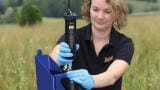
Data on air quality in Edinburgh is being collected by volunteers wearing special backpacks. Scientists are collecting information on the state of the air in the city through people going about their everyday lives wearing monitoring equipment in bags. The bags are worn throughout the day and are then placed by the participants' beds while the sleep, allowing researchers to build a complete picture of Edinburgh's air quality.
Researchers from the Centre for Ecology and Hydrology have given volunteers backpacks that contain air monitoring equipment and GPS tracking technology in order to measure where there are areas that have higher levels of air pollution. The results of the equipment are analysed to assess how much each person is exposed to particulate matter.
Particulate pollution is known to be able to penetrate deeper into the body, which scientists have linked to a number of health issues, including cardiovascular and respiratory problems, and lung cancer.
Professor Dave Newby, from the University of Edinburgh and the British heart Foundation, said: "We all think that when we breathe in air pollution, it must provoke pneumonia, or asthma or lung problems. But actually, it kills far more people from heart disease.
"What we've found is that the biggest trigger is the particulate matter that we breathe in. In the urban environment, the biggest contributor to that is diesel engines."
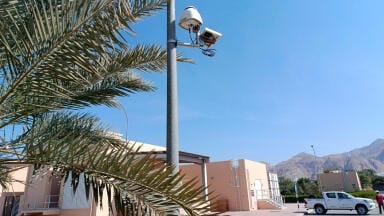
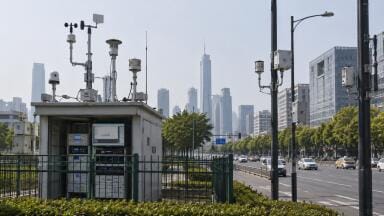
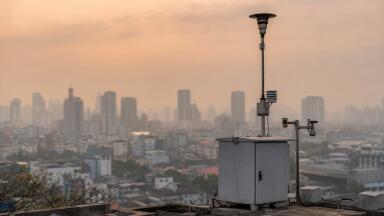
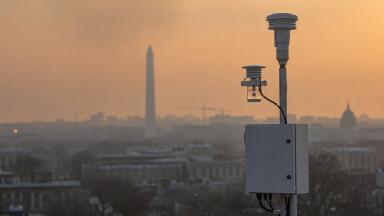
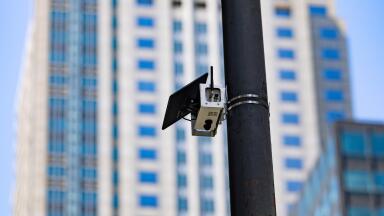
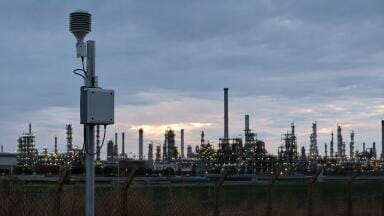
Traditionally, air monitoring is performed by technology that remains at fixed positions throughout a city, giving readings only for specific areas. The use of these backpacks that go to various places in a single day mean that analysis of the quality of air is more accurate and can paint a broader picture of a person's exposure levels.
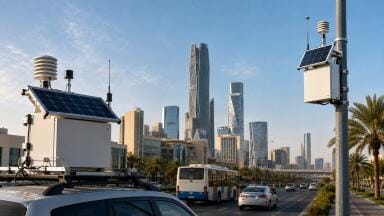
According to Dr Stefan Reis, the leader of the study, this type of mobile monitoring equipment is a more effective and cost efficient form of air monitoring when compared to fixed position technology that forms a network to monitor whole cities. Currently, there are five fixed monitoring stations in Edinburgh; Great Junction street, Central, Inverleith Row, Ratho station and St Johns Road.
IET Guide 2026

 Product directory