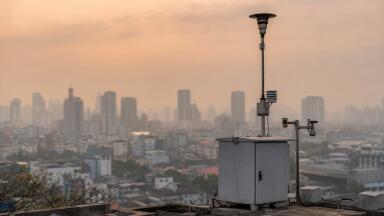
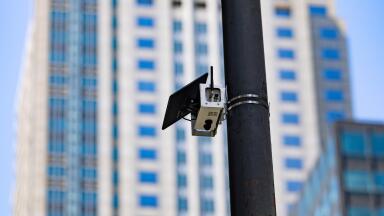
Scientists at the University of Leicester are constructing two pollution probes that are designed to monitor the city's
air quality, according to the Leicester Mercury.
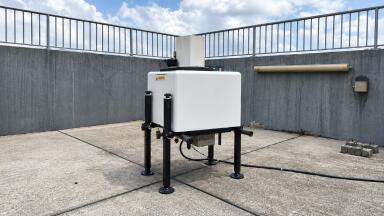
Once completed, the pair of instruments - which are the first of their kind - will be placed at the top of the National Space Centre where they can analyse particles in the atmosphere.
The probes will be programmed to detect and analyse light to see what pollutants it has passed through.
It is hoped that the results of the analysis could be used to help clean up the city's air.
Roland Leigh, project leader, told the publication: "With two of them looking in all directions you build up a three-dimensional map of Leicester's pollution. The map will show where the
air quality issues are."
In addition to locating airborne pollutants, scientists hope that the devices will provide information about how chemicals transform into different gases.
The UK annual
air quality report for 2008 was published by the Department for Environment, Food and Rural Affairs in December.
It revealed that emissions of four major pollutants – ammonia, nitrogen oxides, sulphur dioxide and non-methane volatile organic compounds – have fallen by five, ten, 14 and seven per cent respectively.
Posted by Lauren Steadman


 Product directory