Air monitoring
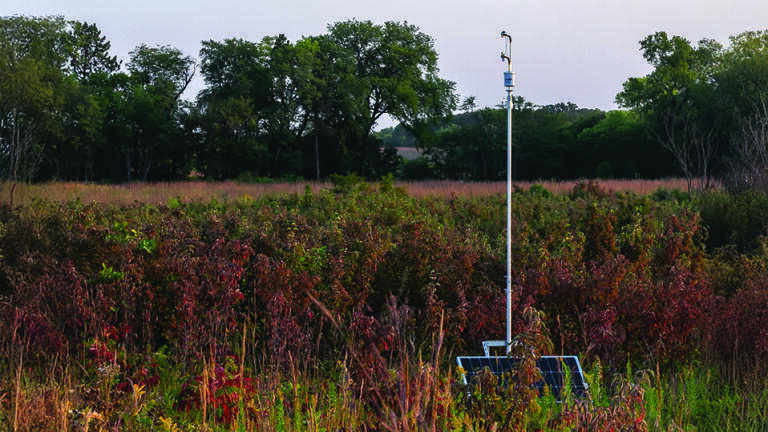
In the era of accelerating climate change, data is one of our most powerful tools. For scientists, land managers, and sustainability leaders striving to understand how ecosystems absorb and release carbon, the Carbon Node from LI-COR represents a transformative advance in environmental monitoring. At its core, the Carbon Node reimagines carbon flux measurement by combining precision, simplicity, and scalability, all essential attributes in a world that demands rapid, defensible insight into carbon dynamics.
Traditionally, measuring carbon dioxide exchange between the land surface and the atmosphere has required complex, costly eddy covariance (EC) towers, extensive support infrastructure, and specialised training. These systems, while scientifically robust, often limit deployment to a handful of sites due to cost and logistical barriers. The Carbon Node challenges that model. It integrates a high-accuracy LI-720 Carbon Flux Sensor with embedded power, communications, and cloud connectivity, allowing researchers to begin gathering actionable measurements in as little as 30 minutes after installation.
By automating data capture and delivering real-time measurements of carbon dioxide flux alongside complementary parameters such as latent and sensible heat flux and key biomet variables, the Carbon Node empowers users to answer vital questions about carbon sources and sinks more quickly and confidently than ever before. Furthermore, leveraging LI-COR Cloud for automatic quality control, gap filling, and post-processing turns raw sensor outputs into defensible, research-grade data without the traditional burden of manual analysis. This enables scientists to scale their observations across landscapes and ecosystems, improving spatial resolution and enhancing the understanding of carbon budgets.
The Carbon Node’s combination of ease, affordability, and scientific rigor makes it a compelling choice for institutions seeking to expand their environmental monitoring footprint. As climate action intensifies globally, tools like the Carbon Node won’t just advance research, they’ll inform policy, guide land management, and shape how society measures progress toward carbon neutrality.
IET Guide 2026

 Product directory















.jpg)