Air monitoring
Published over 14 years ago. See the latest and most current information on Air monitoring.
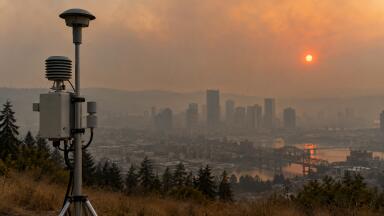
Researchers have initiated the most extensive air pollution research effort to date, taking to the London skies to monitor air quality during the Olympics.
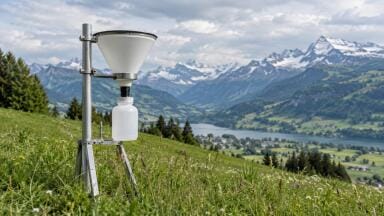
Up to 80 scientists from 11 universities are combining their research efforts to track nearly 1,000 different types of gases and particles in the atmosphere. The measurements are being taken on the ground, at the top of the BT Tower and from a research plane circling the capital.
A primary aim of the research is to measure how much pollution is being generated by the capital itself. London is frequently cited as one of the most heavily polluted cities in Europe, and there was a great deal of concern over health issues affecting athletes and tourists coming into this year's Games.
The ClearFlo (Clean Air for London) project is being led by Dr James Lee of the University of York, who told the BBC that the air contained a "complex cocktail" of chemicals.
"We're trying to find out how pollutants are formed. A lot of the major ones that affect human health are not emitted directly from the backs of vehicles," he said.
"Instead they are formed by a complicated series of reactions that are triggered by sunlight and go on to form other chemicals."
Aircraft instruments will also be able to record pollution over the English Channel, which will be used to see how much pollution is being carried in from the continent. Monitoring air quality has been a big focus in the run up to the Olympics, and projections have gone from 'the most polluted Olympics in history' to the 'least polluted Games in history' in a matter of weeks.
This is something Dr Lee hopes to improve by getting a better understanding of how pollutants are formed in order to produce better forecasts of when air quality will be poor.
Posted by Joseph Hutton
IET 36.5 Sept/Oct 2026



 Product directory