Air monitoring
Industrial environments rely on accurate, continuous gas monitoring to protect workers and ensure safe operations. As devices evolve, so do the pressures placed on manufacturers responsible for designing the sensors inside them. Today’s safety instruments must meet stricter environmental requirements, deliver long-term stability, integrate smoothly into compact architectures, support cost-efficient operation, and accommodate varied sensing technologies - all without compromising safety-critical performance.
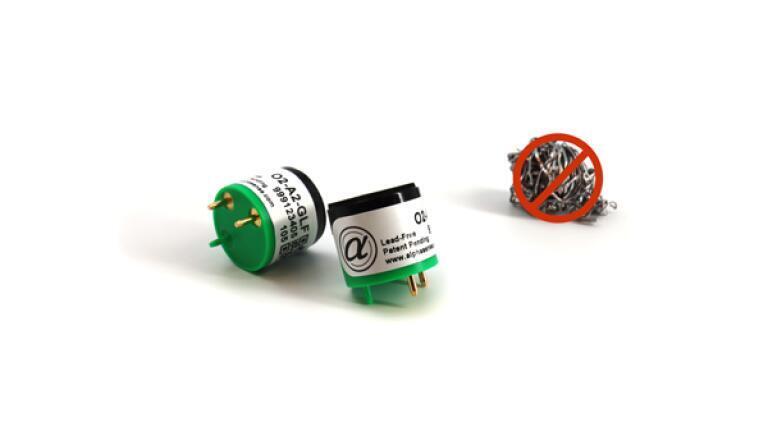
There are a number of factors that increasingly shape modern gas monitor design. Environmental regulation is no longer simply a design constraint; it has become a primary design driver. Lead restrictions under RoHS have fundamentally reshaped oxygen sensor development. Traditional galvanic sensors relied on lead, requiring manufacturers to adopt alternative chemistries to meet regulatory requirements. Today, companies must implement lead-free solutions without compromising performance or triggering costly redesign delays.
This transition extends far beyond material substitution. It influences certification timelines, procurement strategies, and broader ESG compliance objectives. Lead-free technologies also simplify disposal processes, reduce hazardous waste exposure, and support more future-proof product portfolios. For safety device manufacturers, the challenge lies in balancing regulatory compliance with practical considerations such as sensor stability, ease of integration, and overall lifecycle cost. Selecting RoHS-compliant sensors early in the design process helps avoid disruptive redesigns later. Lead-free sensors that function as drop-in replacements for legacy lead-based models are particularly valuable, as they minimise redesign effort and reduce certification expenses.
At the same time, expectations for stability and multi-year performance continue to rise. Industrial safety instruments are expected to operate reliably for years while maintaining consistent accuracy. Any drift, leakage, or instability increases calibration demands, undermines customer confidence, and can expose users to serious risk. Long-life oxygen sensors, some capable of operating dependably for two to five years, reduce service interruptions and deliver consistent readings even in demanding environments. Leak-free architectures play an important role by protecting internal electronics, lowering failure rates, and extending overall instrument lifespan.
Manufacturers now prioritise sensors that provide accurate readings across varying temperature and humidity conditions, offer predictable performance that reduces recalibration frequency, feature leak-free construction to prevent damage to electronics, and deliver operational lifespans aligned with planned service intervals. As customers seek lower total cost of ownership and fewer field failures, long-term stability has become a critical differentiator in the market.
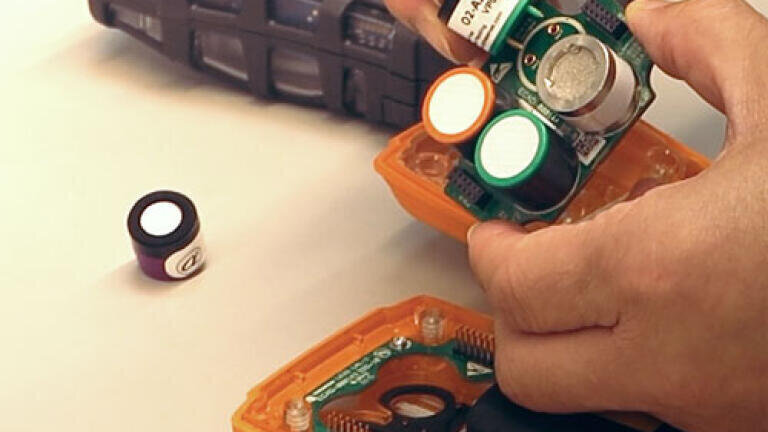
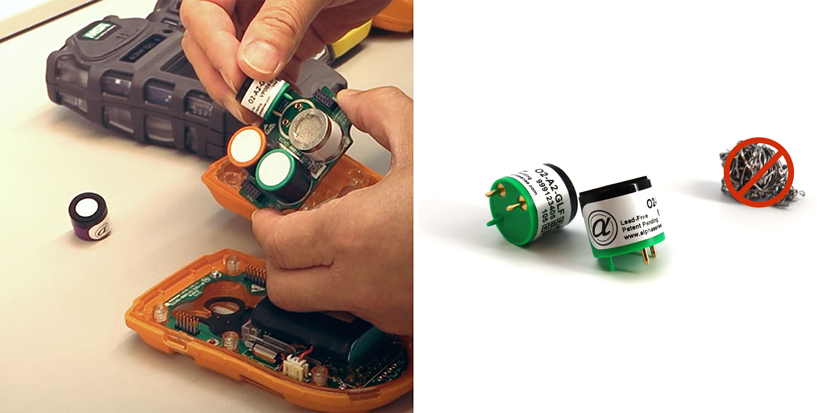
Simultaneously, compact device design is placing new pressure on seamless sensor integration. Portable, wearable, and fixed gas monitors all present strict size and layout constraints. As instruments become smaller, sensors must integrate without requiring mechanical modifications, PCB redesigns, or firmware changes. Drop-in compatibility is increasingly essential. When replacing a lead-based sensor with a lead-free alternative, manufacturers cannot afford to retool enclosures, alter board layouts, or update supporting electronics.
Modern sensor platforms respond to these demands with reduced-height designs suited to compact instruments, standardised footprints that maintain backward compatibility, zero-bias operation that simplifies electronics and extends battery life, and mechanical formats compatible with both portable and fixed monitoring devices. As safety equipment continues to miniaturise, integration-friendly sensor design is vital for maintaining predictable development cycles.
Cost pressures also intensify across the entire product lifecycle. Financial considerations extend well beyond the initial bill of materials to encompass development risk, certification costs, service requirements, and long-term instrument value. Manufacturers must avoid redesigns triggered by regulatory changes, minimise recertification and validation cycles, reduce field failures caused by leakage or signal drift, and leverage long-life sensors to decrease replacement frequency.
Leak-free designs are particularly cost-effective because they protect sensitive electronics and help prevent catastrophic failures. By reducing warranty claims, service interventions, and reputational risk, they contribute directly to improved lifecycle economics. In safety-critical environments where downtime can be both expensive and hazardous, selecting sensors that deliver reliability alongside operational efficiency is not simply advantageous - it is essential.
The right technology mix is critical for multi-gas safety instruments. Modern safety monitors frequently integrate four or more sensing technologies within a single device, typically combining electrochemical sensors for toxic gases and oxygen, catalytic sensors for combustible gases, and photoionisation detectors (PID) for volatile organic compounds (VOCs). Bringing these technologies together in one compact instrument requires careful engineering and strategic component selection.
Each sensing technology involves trade-offs in terms of footprint, operational lifetime, sensitivity, response time, and tolerance to environmental conditions. Even within oxygen sensing alone, manufacturers may choose between galvanic lead-free, galvanic lead-based, or amperometric sensor designs, depending on the specific performance and regulatory requirements of the application.
Designers must therefore balance lifetime expectations versus sensitivity requirements; warm-up time against application urgency; bias requirements versus electronics simplicity and battery life; and compliance expectations versus historical performance needs.
With portfolios spanning multiple formats and operating ranges, manufacturers rely on sensor families that cover diverse gas types without forcing complexity into the device architecture.
Gas monitor manufacturers are navigating a period defined by both constraint and opportunity. Regulatory compliance demands fresh approaches, but it also accelerates the adoption of cleaner, more sustainable technologies. Longer sensor lifetimes help reduce ownership costs while supporting more robust, reliable instruments. Compact design pressures drive innovation that makes safety devices more accessible and user-friendly. And the growing complexity of multi-gas detection encourages sensor platforms that offer flexibility without overhauling existing designs.
Across all five factors, one theme is clear: progress in industrial gas monitoring relies on innovation grounded in practicality. Manufacturers who choose proven, integration-ready, lead-free sensors will not only meet today’s requirements - they will position their safety instruments for the demands of the future.
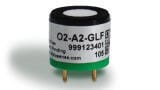
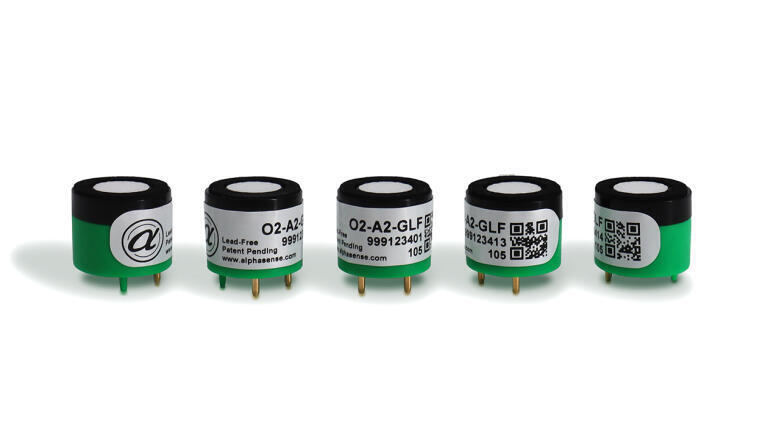
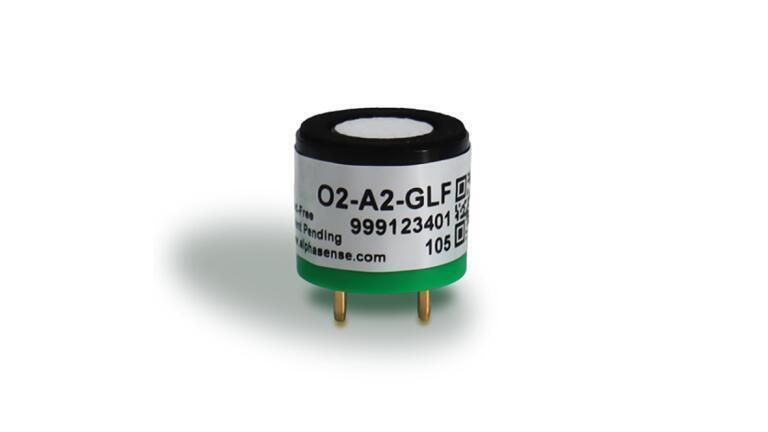
Across every design pressure facing today’s gas monitor manufacturers - 1 regulatory compliance, 2 long-term stability, 3 compact integration, 4 lifecycle cost control, and 5 multi-gas compatibility - the Alphasense O2-A2-GLF delivers a direct, practical answer. Its patent-pending lead-free galvanic technology ensures full RoHS compliance without compromising performance. Built on Alphasense’s proven leak-free platform, it eliminates electrolyte-related failures, protects electronics, and supports multi-year field reliability. As a true drop-in replacement, the sensor fits existing 2-pin architectures with no mechanical, firmware, or electronics changes - ideal for increasingly compact devices and for avoiding costly redesigns or recertification cycles. With zero-bias operation, stable output, and a two-year operating life, the sensor maximises battery life, reduces calibration burden and total cost of ownership while integrating seamlessly alongside other sensing technologies in multi-gas platforms. In short, the O2-A2-GLF combines compliance, reliability, simplicity, and versatility - making it the most practical and future-proof oxygen sensing solution available today.
IET Guide 2026

 Product directory



















.jpg)