Water/wastewater
Published over 17 years ago. See the latest and most current information on Water/wastewater.
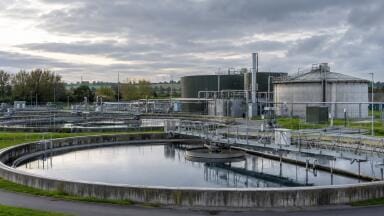
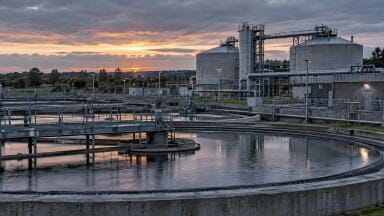
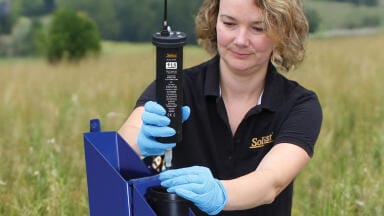
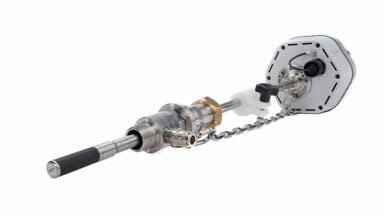
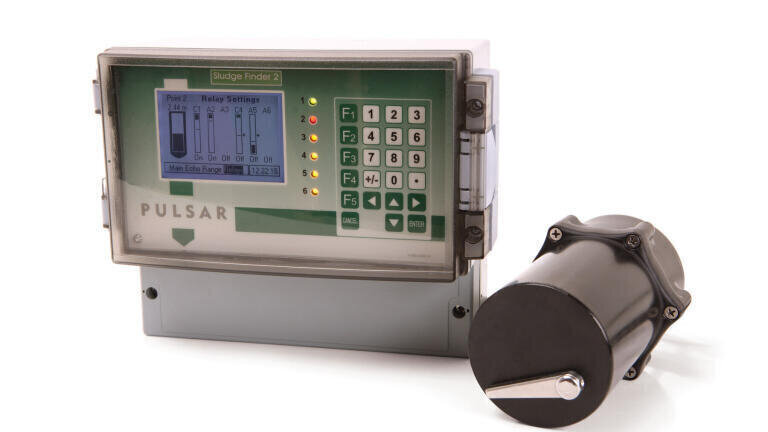
Remote measurement with Sludge Finder 2 means you can put an end to tedious, time consuming, potentially unhygienic and hazardous manual measurements using gap switches or vacuum tubes. Sludge Finder 2 is a major update to Pulsar’s (UK) successful Sludge Finder, designed to reliably measure interface levels in primary, secondary or tertiary sludge tanks and SBR systems. A twin channel device, Sludge Finder 2 can be assigned to two settlement tanks, or one of the channels can be used with a Pulsar dB transducer for ‘through air’ applications such as level measurement. In interface detection mode Sludge Finder 2 operates ultrasonically through liquid, using sophisticated and well proven echo processing algorithms to identify the sludge level. Sludge Finder 2’s transducer is immersed in the liquid, emitting a high frequency (680 kHz) ultrasonic pulse down towards the sludge interface. The pulse reflects from the interface of the denser material back to the transducer face. This echo is analysed by the controller unit providing a depth reading and an analogue output proportional to the height of the
interface above the vessel bottom. Sludge Finder 2 is designed to be self-cleaning, maintenance free and simple to install and program.
IET Guide 2026

 Product directory