Water/wastewater
Published over 13 years ago. See the latest and most current information on Water/wastewater.
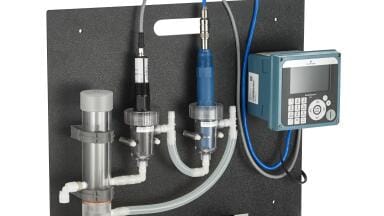
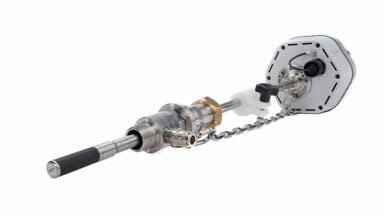
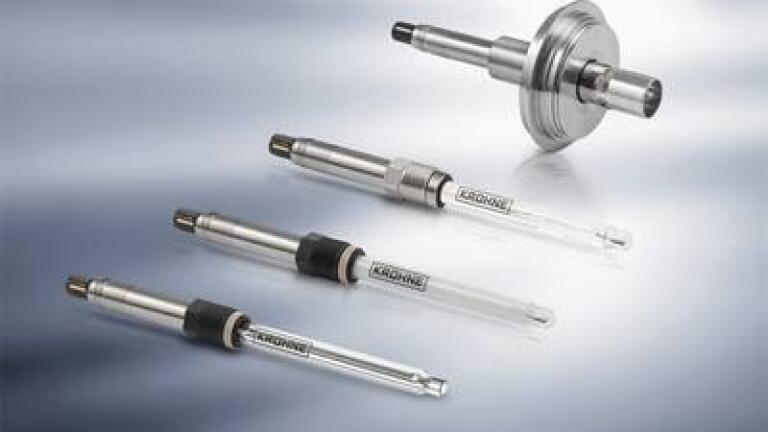
The year 2013 marks a turning point in analysis: Kohne (Germany) have introduced SMARTSENS, the first family of 2-wire loop powered analytical sensors with integrated transmitter technology. SMARTSENS sensors significantly reduce the risk of failures along the chain from sensor to process control system and ease the handling of analytical sensors in a revolutionary way. The first step includes the sensors for pH, ORP and conductivity, followed by other parameters.
Until recently, analytical sensors require an external (proprietary) transmitter on site that translates the sensor signals to the process control system. Considering the possible error by the requirements of IEC 61508/IEC 61511 in the chain from sensor to process control system, the transmitter represents the main source of error in percentage. False installation, cabling or configuration of the transmitter are frequently occurring problems. To eliminate these risks, Krohne miniaturised the transmitter and fitted it into the sensor head: Any SMARTSENS sensor can be connected directly to the process control system, featuring direct communication via 4…20 mA/HART. Hereby, Krohne is the first provider to offer a direct connection from sensor to the process control system via a standardised fieldbus.
Due to influences such as medium, temperature, humidity, environmental conditions or pollution, analytical sensors lose their accuracy over time and need to be calibrated, cleaned, regenerated and ultimately replaced. Today, most of the analytical sensors in the field use analogue technology and have to be calibrated on site together with the transmitter, even if they are installed at remote or difficult-to-reach measuring points under open sky. This presents far from ideal conditions for a calibration which may result in false values in the process control system. Here, SMARTSENS offers a secure alternative: all SMARTSENS sensors are digital sensors and can be (re-)calibrated offline in a laboratory under controlled conditions. The sensors will store the calibration data and can just be plugged in again on site. For offline calibration, the sensor can be connected directly to a PC running the same PACTware (FDT/DTM) as applied in the asset management system, using an USB interface cable for bi-directional HART 7 communication and power supply.
Target industries for SMARTSENS include chemical, pharmaceuticals, food and beverage as well as power, water and wastewater applications. Each SMARTSENS sensor is specifically designed for its area of application: approvals and certificates range from installation in explosive areas (zone 0) to hygienic areas. Along with the sensor family, Krohne introduces a large portfolio of accessories, including loop powered displays, USB interface cable and mounting assemblies.
IET Guide 2026

 Product directory