Water/wastewater
Artificial intelligence is increasingly being framed not just as a useful tool for environmental science, but as a force reshaping how the field operates. That is the argument made in a new perspective article highlighted by Biochar, which describes AI as helping environmental research move away from largely observational methods and towards more predictive, integrated, and intelligent systems.
The authors review the growing role of machine learning, deep learning, and large language models across environmental science, arguing that these tools are beginning to change not only how data are analysed, but how research questions are approached in the first place. Rather than treating environmental monitoring as a process of gathering isolated measurements and interpreting them afterwards, the article suggests that AI is helping to build a more connected and anticipatory model of environmental research.
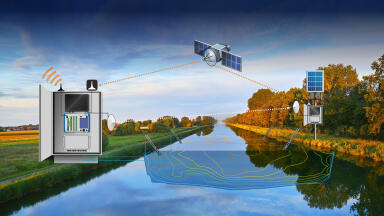
For water monitoring professionals, the most relevant part of the article is its discussion of AI-enabled water management. The authors argue that AI-powered monitoring systems can combine information from sensors, satellites, and environmental models to track pollution and water quality in real time.
According to the article, these systems can do more than simply display live conditions. They may also be able to detect anomalies, predict contamination events, and provide early warnings that allow authorities to act more quickly and effectively. That is an important distinction. It suggests a move away from water monitoring as a mainly reactive activity and towards a model in which monitoring data support forecasting, prevention, and faster operational decision-making.
One of the article’s central arguments is that traditional environmental research has often relied on field measurements and stand-alone datasets that struggle to reflect the complexity of real environmental systems. In water monitoring, that challenge is familiar. Data may come from online analysers, grab samples, laboratory tests, catchment surveys, remote sensing tools, weather data, or hydraulic and water quality models, but these sources are not always well integrated.
The article presents AI as a way of connecting those fragmented sources of information. By linking large and varied datasets, researchers may be able to uncover hidden patterns, better understand how pollutants move through water systems, and identify relationships across spatial and temporal scales that would otherwise be missed. For professionals working in rivers, reservoirs, groundwater, wastewater, or drinking water systems, that kind of integration could significantly improve situational awareness.
The strongest practical implication for the water sector is the promise of earlier warning. If AI systems can recognise unusual changes in incoming monitoring data and relate them to historical trends, model outputs, or wider environmental conditions, they may help detect emerging contamination events sooner than conventional methods alone.
That could be valuable in a wide range of applications, from identifying pollution incidents in rivers to anticipating algal blooms, tracing diffuse contamination risks, or improving the management of treatment processes. For regulators, utilities, and catchment managers, the potential benefit is not simply more data, but more timely insight. A monitoring network that supports prediction rather than retrospective analysis could improve both response speed and resource allocation.
The article also points towards a broader change in the role of monitoring itself. In an AI-enabled system, instruments and sensors are no longer only there to record parameters for compliance or reporting. They become part of a larger decision-support framework in which data are continuously interpreted, compared, and used to forecast what might happen next.
For the water sector, this could strengthen source identification, improve pollution modelling, and support more targeted interventions. It may also help organisations deal with the sheer scale of environmental data now being generated by distributed sensor networks, satellite platforms, and digital infrastructure. AI, in this framing, is less about replacing monitoring professionals than about expanding what can be done with the data they produce.
The article does not ignore the constraints. The authors note that environmental data are often incomplete, inconsistent, or highly complex, and that these weaknesses can affect the reliability of AI models. That point is particularly important in water monitoring, where datasets may differ in calibration quality, sampling frequency, maintenance history, analytical method, and spatial coverage.
In other words, AI does not remove the need for sound monitoring practice. If anything, it raises the value of robust instrumentation, well-managed datasets, and expert interpretation. The article also highlights ethical and accessibility issues, suggesting that responsible deployment will depend not just on technical performance, but on transparency, fairness, and good governance.
Taken together, the article presents AI as a technology that could push water monitoring towards a more predictive and integrated future. The combination of artificial intelligence with remote sensing, cloud computing, and the Internet of Things could make monitoring systems more continuous, connected, and operationally useful.
For water monitoring professionals, the message is that the next phase of innovation may not depend solely on better hardware, but on better integration of monitoring data into intelligent systems. The core task remains the same: generating reliable information about the state of water environments. But increasingly, that information may be expected to do more than describe current conditions. It may also need to help predict risk, guide intervention and support faster, smarter environmental management.
IET 36.5 Sept/Oct 2026




 Product directory