Water/wastewater
Published over 14 years ago. See the latest and most current information on Water/wastewater.
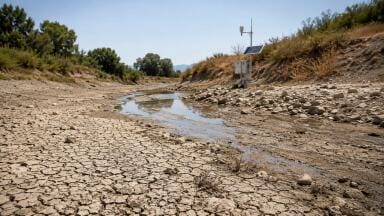
The world must urgently respond to the global water crisis to prevent conflicts, ensure fair access to this life-giving resource, and reduce unsustainable use of water and other natural resources to protect the planet, Green Cross International Founder Mikhail Gorbachev said during his address to today’s high-level opening of the 6th World Water Forum.
President Gorbachev, a Nobel Peace Prize laureate, said there must be a political, economic and social shift in the way we deal with water, otherwise the world will encounter devastating political and humanitarian consequences.
“Water is at the heart of our economies, our societies, our futures,” “Water is the basis for all development and its strategic importance has demonstrated it can serve as a vehicle for peace and also tension. The risk of competition between regions and countries may only increase if we do not find a way to protect and share water.”
“On our planet Earth we do have water, but accessible resources of fresh water are limited, and water use for human needs keeps rising. Continuation of water consumption at 20th century rates is no longer possible,” President Gorbachev told the World Water Forum, being held in Marseille, France. “At the same time, millions of people die in poorer countries as a result of using untreated water. At Green Cross, we deploy our efforts in the prevention of conflicts related to access to water resources or resulting from their use as an instrument of pressure or diktat.”
Some 800 million people have no access to safe-drinking water, and 2.5 billion lack basic sanitation services. Water shortages and pollution cause major public health problems, curb development and harm ecosystems. More children die from diarrhoea caused by dirty water and lack of sanitation than malaria, measles, and HIV/AIDS combined. In North America and Japan, people use an average of 350 litres of water a day, and Europeans consume 200 litres daily, compared to people in Sub-Saharan Africa, who on average use 10-20 litres.
If well used and managed, enough water exists on the planet for everyone, President Gorbachev said. Yet this finite resource is not equally distributed nor adequately conserved. Poor governance to manage water gives rise to potential conflicts over its control. And despite access to water and sanitation being declared a human right by the United Nations in 2010, many governments are not doing enough to ensure their people are able to realize these fundamental needs.
President Gorbachev said governments must ratify the 1997 United Nations Watercourses Convention, the only global legal framework to govern and manage the world’s 276 cross-border watercourses. Thirty-five countries must ratify it for it to come into force. So far, 24 countries have done so, including most recently Burkina Faso, Morocco and France. “A global legal instrument would help ensure equitable and sustainable management of international watercourses,” he said.
Some 145 countries share these rivers and groundwaters linked to them. Their basins are home to 40% of the planet’s population. But only 40% of international watercourses are covered by official agreements on how to share and manage them, many of which are unsatisfactory. These weaknesses must be addressed to tackle global challenges like climate change and growing water demands
IET 36.3 May

 Product directory