Water/wastewater
Published over 10 years ago. See the latest and most current information on Water/wastewater.
Rapidly advancing technology means that a robot can now be programmed to do most things a human can, and a lot of things that humans can’t. One thing we struggle to do is predict the outbreak of various diseases. However, researchers at the Massachusetts Institute of Technology (MIT) may have found a way that robots can do so, or at least help.
The sewers are packed full of bacterial information, amongst other things. Accessing them opens up a whole new world for researchers, but it’s a difficult and unpleasant job. Cue the robots. MIT researchers been sending robots down into the sewers for journeys of 1-2 hours to collect samples.
It’s not just about avoiding the tough job though. The robots can carry out the task much more efficiently than any human. Their size means they can move around the sewers easily, and they can travel on exact routes. With GPS devices fitted, they can also be tracked along their journey. Consequently, when they return, the samples are traceable to their original location.
Using the samples, researchers will be able to check for viruses and bacterial pathogens. This is why traceability is particularly important – because it allows scientists to study localised health. The researchers ensured the water was no more than 10 minutes from its point of origin.
The ideal end product is to be able to use the information to inform local governments or policy-makers on potential outbreaks. If, for instance, they discover a water-borne disease, they will be in a better position to control and cure it if they catch it earlier.
With this sampling method, they will also be able to study the diets of the local inhabitants – including drug use. As well as testing the diets in relation to health concerns like diabetes, it means they can test the efficacy of certain policies. If a particular drug is banned the researchers will have means to compare the intake.
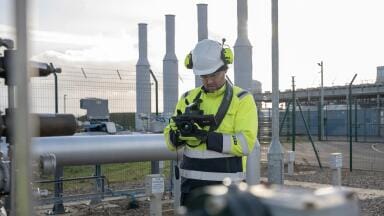
Robots can play a huge part in scientific research because they provide a level of accuracy that humans cannot replicate. They can also take out some of the more time consuming and laborious tasks. In the industrial world, robots can be equally important. Detecting gas leaks is a case in point. Robots are efficient, reliable, objective and cannot be harmed by the potentially dangerous environment. The development of robots to take over these essential jobs is reviewed in ‘Remote Detection and Localisation of Gas Leaks with Autonomous Mobile Inspection Robots in Technical Facilities’.
IET Guide 2026

 Product directory