Water testing
This reflects a move away from approaches centred mainly on structural condition checks and hazard classification, towards frameworks that explicitly evaluate risk as a combination of likelihood and consequence, with uncertainty treated as a core part of the analysis rather than an afterthought.
For environmental monitoring professionals, this shift matters because monitoring data is no longer viewed as a passive record of asset condition. Instead, it is becoming an active input into safety cases, operational decisions, and investment prioritisation.
Traditional reservoir safety regimes have relied heavily on hazard potential classifications, which are largely consequence-based. A reservoir is classed as high, medium, or low hazard depending on the potential downstream impacts of failure, particularly loss of life. While this remains important, it does not distinguish between assets with very different probabilities of failure.
Risk-based analysis adds this missing dimension. It asks not only “what would happen if the dam failed?”, but also “how credible are the failure mechanisms that could lead to that outcome, given current conditions and evidence?”. This allows owners and regulators to compare risks across portfolios, rather than treating all high-hazard reservoirs as equally urgent.
Major dam safety programmes, including those operated by the U.S. Army Corps of Engineers, the Federal Energy Regulatory Commission, and the Federal Emergency Management Agency, explicitly frame reservoir safety as a risk management problem. Similar thinking underpins UK reservoir safety guidance and international best practice promoted through professional bodies and regulators.
Risk-based reservoir management typically begins with structured identification of potential failure modes. These describe credible ways in which a dam or its appurtenant structures could fail, such as overtopping erosion, internal erosion or piping, slope instability, spillway malfunction, or loss of gate control during extreme events.
Each failure mode is treated as a sequence, starting with an initiating event and progressing through intermediate states towards a potential breach or uncontrolled release. This approach matters for monitoring because it creates a direct line between specific physical processes and the data needed to observe them.
Instead of asking whether a reservoir is “safe” in general, risk-informed programmes ask whether available evidence supports or contradicts the plausibility of particular failure mechanisms. Monitoring data therefore becomes evidence that updates the assessed likelihood of those mechanisms over time.
Once failure modes are defined, risk analysis estimates the likelihood of each sequence and the consequences should it occur. In practice, probabilities are often conditional rather than absolute: for example, the probability of internal erosion given observed seepage behaviour during high reservoir levels.
Uncertainty is explicit. Rather than assuming design floods or material properties are fixed and known, risk-based methods acknowledge incomplete knowledge and use monitoring to reduce uncertainty where it matters most. High-consequence reservoirs with large uncertainty bands are therefore prime candidates for enhanced instrumentation and surveillance.
A key conceptual change is that monitoring is treated as a risk control measure. Good data can reduce uncertainty, provide early warning, and support timely intervention, all of which lower overall risk even if the physical structure remains unchanged.
For monitoring professionals, this reframes the purpose of instrumentation programmes. Sensors are no longer installed simply to satisfy inspection requirements, but to address clearly defined questions within the risk model: is a failure mode becoming more credible, less credible, or unchanged?
This has several practical implications.
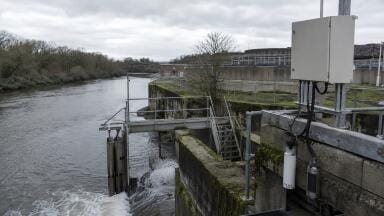
Risk-based analysis encourages targeted monitoring aligned with dominant risks at each site. For internal erosion and piping, this typically prioritises seepage measurement, pore pressure monitoring, and indicators of material transport. For instability risks, deformation and movement monitoring becomes central. For overtopping and operational risks, reservoir level measurement, spillway and gate condition monitoring, and hydrometeorological inputs gain importance.
Environmental measurements can also play a corroborating role. For example, downstream turbidity or water quality changes may support interpretation of seepage data where internal erosion is a concern.
Because monitoring data feeds directly into risk judgements, issues such as sensor drift, calibration intervals, redundancy, power resilience, and communications uptime take on greater significance. A failed or misleading sensor does not just create a data gap; it can distort the perceived likelihood of a failure mode.
As a result, risk-informed programmes often demand stronger quality assurance, clearer documentation of uncertainty, and explicit links between alarm thresholds and decision pathways.
In a risk-based context, thresholds are less about absolute pass/fail limits and more about decision triggers. Exceedance of a threshold may prompt increased surveillance, operational restrictions, or escalation to engineering review, rather than immediate declaration of an unsafe condition.
This aligns monitoring more closely with operational decision-making, particularly during flood events, when reservoir levels, inflows, and gate performance must be interpreted rapidly under uncertainty.
For owners managing multiple reservoirs, risk-based analysis supports portfolio prioritisation. Monitoring upgrades can be justified where they deliver the greatest reduction in uncertainty or risk per unit cost, rather than being distributed evenly or driven solely by age or hazard class.
For monitoring suppliers and practitioners, this creates demand for solutions that can demonstrate how they contribute to risk reduction, not just data generation.
The growing use of risk-based analysis means environmental monitoring professionals are increasingly contributing to safety assurance rather than peripheral compliance. Instrumentation, telemetry, data management, and analytics are becoming integral to reservoir risk models and operational safety cases.
In practice, this favours monitoring programmes that are clearly mapped to failure modes, robust under extreme conditions, and supported by transparent data governance. As climate variability, ageing infrastructure, and regulatory scrutiny continue to increase, risk-informed reservoir management is likely to further elevate the strategic role of monitoring in dam safety worldwide.
IET Guide 2026

 Product directory