Water quality monitoring
Published over 15 years ago. See the latest and most current information on Water quality monitoring.
OndaVia (USA) a developer of portable instrumentation for the identification of waterborne contaminants, announced it has received a Phase II Small Business Innovation Research (SBIR) grant from the National Science Foundation in the amount of $461,020. This funding sponsors a two-year project to take the company’s proof-of-concept for water contaminant detection to a commercial prototype. The objective of the research is to produce a portable instrument and consumable cartridges that allow real-time monitoring of contaminants in water at the part-per-billion level.
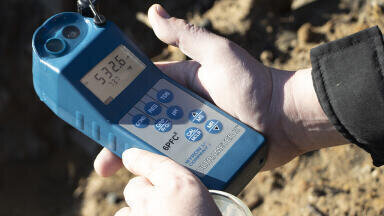
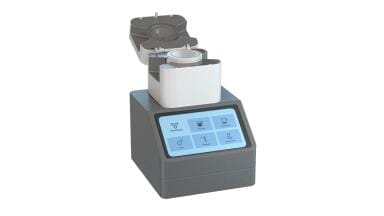
Through its advancements in Raman spectroscopy and microfluidics technologies, OndaVia is changing how trace levels of contaminants for industry and municipalities are identified and analysed. Users, needing very little training, simply place a drop of water on a cartridge and insert it into a portable instrument that reports results in the field in minutes. Eliminated are difficult sample storage, shipping to a remote laboratory, or waiting weeks for results. The technology allows accurate and rapid analysis of organics, inorganics, heavy metals, and endocrine disrupting compounds, as well as pharmaceuticals and personal care products for water, wastewater, and industrial water. The battery-operated, portable system can be carried to the test site and used without any hazardous reagents or calibration. Results are displayed and stored in the unit in minutes. Each specially-designed cartridge is single-use and disposable.
OndaVia’s contaminant analysis system will bring reliable information quickly to those that are concerned with the quality and quantity of our scarce and most precious resource: water. Providing immediate, laboratory quality information without highly trained personnel will make testing more pervasive.
IET 36.5 Sept/Oct 2026


 Product directory




.jpg)








.jpg)