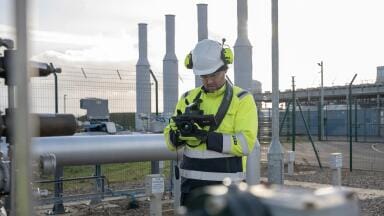
Water pollution monitoring
But beyond the political framing, the measures point to a practical shift that environmental monitoring professionals will recognise immediately: a move away from “desk-based” oversight towards more direct, asset-level scrutiny, backed by inspections without notice, regular checks, and closer supervision of individual companies.
For those working in water quality monitoring and overflow monitoring, this matters because it changes what evidence is expected, how quickly it must be produced, and how robust it needs to be under challenge.
A central theme in the government’s narrative is that water companies have been marking their own homework. That language is not accidental. It signals a push for monitoring regimes that can stand up to independent verification, including unannounced inspections and more frequent operational checks.
In practice, this tends to raise the bar on three things.
First is data defensibility. Monitoring results that were previously good enough for routine reporting may now need stronger audit trails: instrument calibration records, maintenance schedules, validated methods, and clear QA/QC documentation.
Second is timeliness. When scrutiny intensifies, the value of slow-turnaround indicators falls sharply. Traditional culture-based approaches still have an important regulatory role, but they can be poorly matched to short-lived contamination events, especially around storm conditions. The likely direction of travel is towards faster, more responsive monitoring strategies that better capture dynamic conditions.
Third is coverage. Unannounced inspections and company-specific supervision can expose blind spots: assets with weak monitoring, catchments with insufficient sampling density, or overflow sites where event records do not align with downstream impacts.
Public anger about pollution incidents is largely driven by sewage discharges and the visible deterioration of rivers and coastal waters. That places storm overflows at the centre of the story, even when they are not named explicitly.
Overflow monitoring and water quality monitoring are often treated as parallel disciplines: one focused on operational performance and event logging, the other on environmental condition and compliance. In reality, the two are increasingly being judged together.
Overflow monitoring answers questions such as: when did the discharge occur, how long did it last, and which asset was responsible? Water quality monitoring answers: what did it do to the receiving water, and how quickly did conditions recover?
Regulators, campaign groups, and the public are now demanding both. If the “proof is in the river”, then an overflow record alone will not be enough. Equally, water quality results without a clear discharge timeline can struggle to drive enforcement or investment decisions.
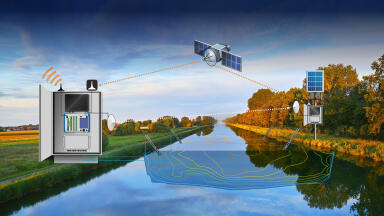
This is where monitoring professionals can expect pressure to build around event-based and integrated approaches: aligning rainfall data, flow and level measurements, pump station telemetry, and downstream water quality signals into a coherent account of what happened.
A shift towards inspections without notice changes operational incentives. When inspections are predictable, monitoring can become performative: equipment is serviced “for the visit”, gaps are patched, and borderline systems are temporarily stabilised.
Unannounced checks reward a different culture: continuous readiness. That tends to increase demand for monitoring systems that are not only accurate, but maintainable under real-world conditions.
For water quality, that means instruments and sampling workflows that can tolerate high turbidity, variable flows, biofouling risk, and intermittent access. For overflow monitoring, it means event detection that is reliable in poor weather, with telemetry that does not fail during the very periods when overflows are most likely.
It also pushes attention towards failure modes that monitoring teams often see first: sensor drift, blocked intakes, power interruptions, comms dropouts, and inconsistent configuration across large asset estates.
The government’s language around “MOT-style checks” is significant because it suggests a model of regular, standardised assessment, potentially applied across networks and treatment assets.
For monitoring professionals, the practical implication is that compliance may increasingly be assessed through performance indicators that depend on monitoring quality, rather than only on written plans or annual returns. If pollution incidents are rising and service interruptions are increasing, the question will become not just whether a company has monitoring in place, but whether it is producing actionable intelligence and preventing repeat failures.
This is likely to accelerate interest in monitoring approaches that can support operational decision-making, such as:
In other words, monitoring becomes part of how the system is run, not just how it is reported.
The story references a major investment programme intended to address under-investment and ageing infrastructure. For monitoring teams, large capital programmes tend to create a familiar problem: upgrades are promised, but baseline evidence is incomplete, inconsistent, or disputed.
That is not a purely technical issue. It becomes political when customers face higher bills and want proof that spending is reducing pollution and outages.
This is where environmental monitoring becomes central to credibility. Baseline monitoring must be good enough to support comparisons before and after upgrades, and to distinguish between improvements driven by engineering changes versus those driven by weather variability or seasonal shifts.
Overflow reduction programmes, in particular, will increasingly need monitoring frameworks that can quantify outcomes, not just activity. It is no longer sufficient to say that a tank was built or a sewer was relined; stakeholders will ask whether spill frequency and duration fell, and whether river conditions improved.
The White Paper proposes company-specific teams to supervise individual firms, moving away from a one-size-fits-all model. That implies more differentiated expectations, based on local performance and local risk.
For monitoring professionals, this is likely to favour risk-based monitoring strategies: identifying high-consequence discharge points, sensitive receiving waters, and assets with a history of repeat incidents. It also supports more strategic deployment of monitoring resources, including short-term investigative campaigns and permanent installations where the evidence burden is highest.
It may also increase the value of monitoring that supports accountability across complex catchments, where sewage discharges interact with agricultural runoff, urban drainage, and seasonal low flows. In those environments, better monitoring is often the only way to separate competing claims about causality.
Even if a new regulator takes time to establish, monitoring expectations can shift quickly. Unannounced inspections, closer supervision, and heightened public scrutiny tend to have immediate effects on what data is requested and how it is interrogated.
For environmental monitoring professionals, the direction is clear: stronger emphasis on continuous readiness, event-based evidence, and integration between overflow monitoring and water quality outcomes. The sector is moving from reporting compliance to demonstrating performance in the receiving environment.
IET Guide 2026

 Product directory