River water monitoring
Published over 10 years ago. See the latest and most current information on River water monitoring.
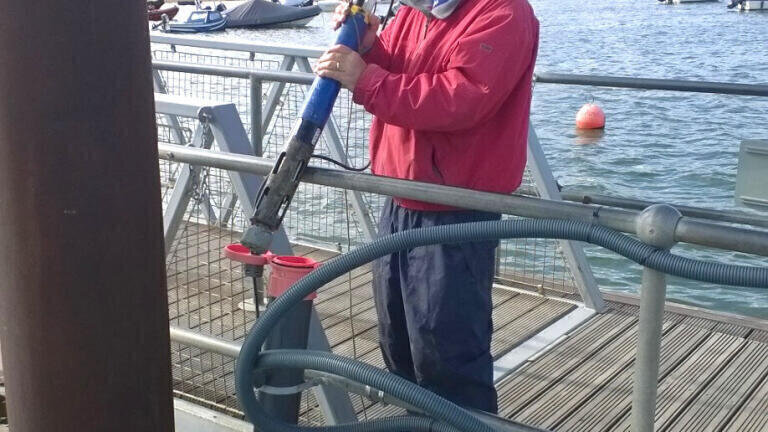
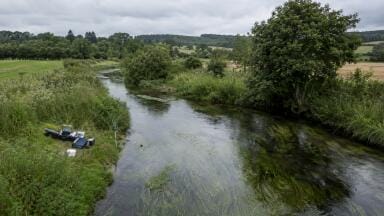
Researchers from the south coast of England have established a small network of monitoring instruments in Christchurch Harbour and associated rivers to study the effects of weather events on water quality, and to better understand the magnitude and spatial/temporal variation of macronutrient fluxes - nitrogen (N), carbon (C) and phosphorus (P). The project, which is financed by a Natural Environmental Research Council grant, has involved the installation of three continuous monitoring stations; one in the harbour itself, a second in the river Avon and a third in the river Stour. Each monitoring station includes a Xylem YSI (UK) EXO2 multiparameter water quality monitoring sonde and a Xylem Storm3 Data logger that wirelessly transmits readings to the Storm Central ‘cloud’ hosted data collection platform so that readings can be viewed on the project website www.christchurch-macronutrients.org.uk.
The EXO2 sondes run on low power for long-term deployments and each was equipped with dissolved oxygen, conductivity, temperature, turbidity, chlorophyll, depth and pH sensors. A novel ‘lab-on-a-chip’ nitrate sensor, developed at the NOC, performs miniature colorimetric nitrate analysis at programmable hourly intervals, with a serial output to the Storm datalogger. Consequently nitrate data, which reveals complex daily cycling and response to storm events, has been incorporated with that from the EXO sondes.
Summarising, project lead Prof. Purdie says: “We are obviously very pleased with the Xylem monitoring equipment; we found good correlation between the macronutrient concentrations in the frequently collected water samples and NOC’s nitrate monitor with the continuous data from the EXO sondes providing key water quality parameters at 10 minute intervals over a period of more than a year so far. As a result, we have been able to capture continuous data throughout the life of the project and this has provided tremendous insight into the estuarine behaviour of macronutrients throughout all seasons and during all types of weather. The monitors are still operational, so we hope to extend the project for a longer period and further improve the models that have benefited from the data so far.”
IET 36.5 Sept/Oct 2026



 Product directory

















.jpg)







.jpg)