River water monitoring
Published over 11 years ago. See the latest and most current information on River water monitoring.
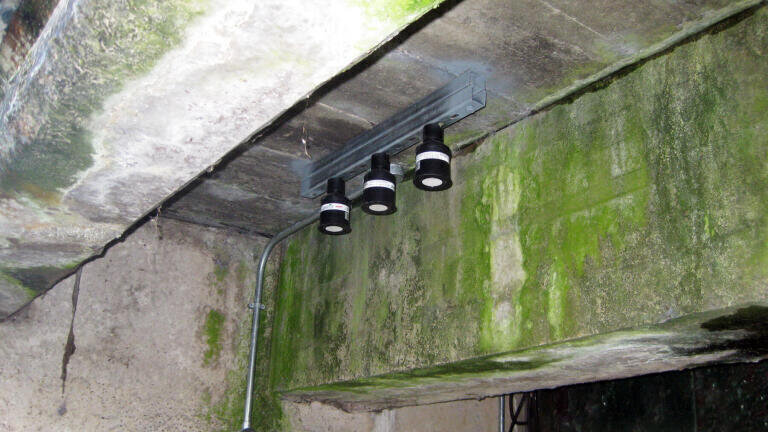
Pulsar Process Measurement Ltd (UK) have helped the EA measure and validate water levels within two vital sluices that protect Manchester and other population centres along the River Mersey from the risk of flooding. To validate the measured levels, Pulsar supplied three dBi Intelligent Transducers at each location, programmed via HART modems, with analogue signals routed through PLCs to confirm the measurement.
The River Mersey was once the most polluted river in Europe. Now, after projects led by the Environment Agency (EA), the Mersey is clean enough to have, not only a wide range of wildlife including salmon, but a scuba diving centre near the centre of Liverpool. It is, however, still prone to flooding within the basin of the River Mersey, and a key factor within EA flood alleviation schemes are the sluices that allow flow into designated flood plains. In these sensitive areas, accurate and validated river level measurement within the sluices is vital, and the EA turned to Pulsar for a non-contacting solution.
Pulsar’s answer was the cost-effective, self-contained dBi Intelligent Transducer, which provides, as standard, a 4-20mA output proportional to level, with a choice of RS485 digital communications. For a fixed purpose application such as this, the IP68 unit offers simple programming via a proprietary HART programmer (a Profibus version is also available), and the benefit of Pulsar’s world-leading DATEM echo processing software. dBi transducers are robust and extremely reliable, but three transducers mounted together provides confidence that, should one fail or lose accuracy, the other two will maintain control
The dBi is a compact, non-contacting ultrasonic device, available in a choice of 3m, 6m, 10m or 15m range. Loop powered, dBi Transducers are very easy to install and calibrate, and measurement is communicated either through the 4-20mA analogue output or through the digital protocol (HART or Profibus).
IET 36.5 Sept/Oct 2026




 Product directory




















.jpg)







.jpg)