River water monitoring
What began as a grassroots response to vanishing fish and murky banks has blossomed into one of the most impactful citizen science initiatives in the country’s recent environmental history.
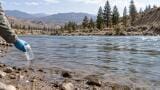
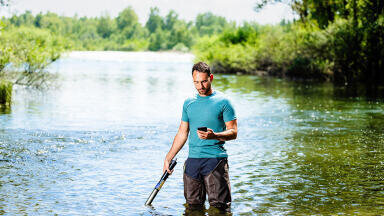
The Water Quality Monitoring Network (WQMN), founded by the Angling Trust as part of its Anglers Against Pollution campaign, has brought hundreds of volunteers together to measure water quality across 163 rivers in England and Wales.
The findings are stark: 83% of rivers failed to meet the phosphate standard for good ecological health in at least one sample.
In catchments like the Medway, Swale, and Upper Ouse, the situation is even more dire, with every site average exceeding safe phosphate levels.
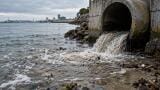
Phosphate pollution, largely invisible to the naked eye, wreaks havoc below the surface.
Though phosphorus is a vital nutrient for plant and animal life, when it floods freshwater systems (often from agricultural runoff, sewage leaks, or industrial discharges) it triggers a destructive process called eutrophication.
This excessive nutrient loading fuels explosive algal blooms that block sunlight, suffocate aquatic plants, and deplete oxygen, ultimately leading to fish kills and biodiversity collapse.
As Bethan Stones of environmental consultancy Cura Terrae explains, eutrophication isn't just an ecological issue.
It threatens human health, economic activities, and even the aesthetic and recreational value of waterways.
Toxins from algal blooms can contaminate drinking water and harm both wildlife and people.
The Angling Trust’s findings have sparked renewed calls for stronger environmental regulation. With Environment Agency monitoring reduced and water industry transparency lacking, the trust says citizens have stepped into a critical gap.
In some areas, like the Norfolk Broads, anglers have even helped university researchers study and combat Prymnesium blooms, a toxic algae capable of devastating fish populations.
In Kent, anglers from the Royal Tunbridge Wells Angling Society took 279 water samples along the Medway, all breaching legal phosphate limits.
Their pressure led to a joint monitoring group that identified wastewater treatment works and combined sewer overflows, primarily from Southern Water, as the major culprits.
Public protest, in turn, forced upgrades at the Fullerton wastewater treatment plant, cutting sewage spills.
Despite the efforts of citizen scientists, frustration abounds.
Volunteers like Andy Hammerton in Warwickshire, where 86.4% of tested sites breached safe phosphate limits, express a bittersweet hope that their data might protect future generations, if not their own.
The findings echo a wider crisis: only 16% of English rivers currently meet good ecological status, and nearly one-third of all samples taken breached phosphate safety thresholds.
Other nutrients, like nitrates, are also surging: 45% of samples exceeded the 5ppm level considered excessive by freshwater ecologists.
Citizen science has done more than reveal a crisis. It has helped shift the power dynamics of river governance.
By collecting rigorous data and working with researchers at institutions like the University of Bristol and University of East Anglia, volunteers have demonstrated that ordinary people can play a critical role in environmental monitoring and policy.
With a general election on the horizon, campaigners are calling for political parties to commit to stricter enforcement of existing water laws and to bring in new protections, especially for vulnerable habitats like chalk streams, which recently lost out on proposed legislative safeguards.
IET 36.5 Sept/Oct 2026

 Product directory



.jpg)












.jpg)


.jpg)