Industrial emissions
Published over 2 years ago. See the latest and most current information on Industrial emissions.
The measurement of CO2 emissions is the biggest change to the emissions monitoring systems market.
The assumption that biogenic CO2 emissions amount to 50% of total CO2 flue gas emissions in waste incineration plants will lead to a costly underestimation when reporting to Emissions Trading Schemes.
The incineration of municipal solid waste and RDF is inhomogeneous which causes considerable fluctuations to the biogenic portion.
The actual prices for 1 ton of CO2 vary in the different ETSs. Between €45 in the German Fuel Trading act and around €100 in the UK carbon tax regulation.
Using the example of a EfW plant with emissions of approximately 100,000 tons of CO2 per year, for every 10% above the assumed base level of 50%, plants could be offsetting values of somewhere between €450,000 and €1m.
Therefore, it is very much in the financial interest of the plant to accurately report the fluctuations of the biogenic CO2 emissions.
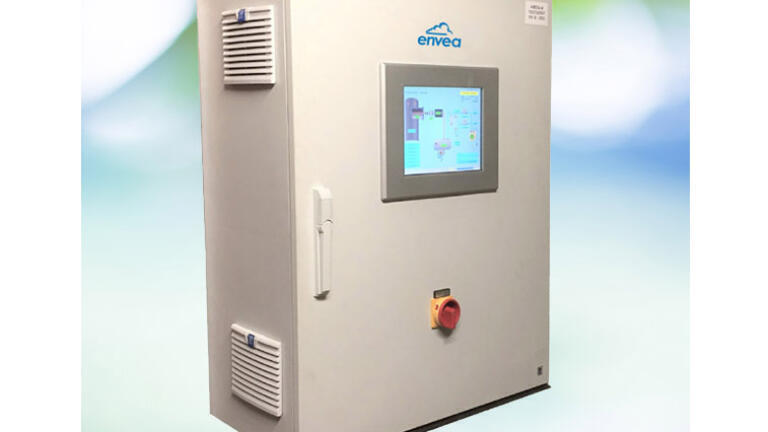
The AMESA-B from ENVEA offers the most accurate and easy to use measurement system for determining fossil and biogenic CO2 emissions.
The AMESA-B adopted a sampling method which has been successful for almost 30 years.
Following successful trials with the UK’s big 5 waste-to-energy companies and many sites across Europe, the AMESA B system is empowering sites to accurately assess the biogenic fraction of their carbon emissions.
The AMESA B system was designed to follow the EN 15267-3 standard and meet the requirements of EN ISO 13833 by sampling flue gas on a CO2 adsorber. After the sampling period, the adsorber cartridge is sent to a C14 accredited laboratory.
The 14C method uses the fact that the fossil and biogenic materials can be identified by a marker of the carbon atoms. The fossil material consists of 12C and biogenic material includes 14C.
The AMESA-B provides full compliance with EN ISO 13833:
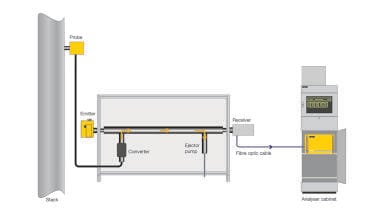
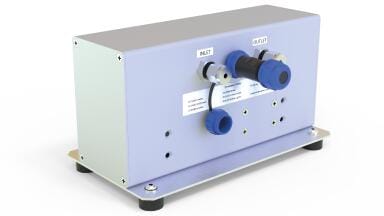
CO2 sensors are installed before and after the adsorber cartridge to compare the CO2 concentration in the stack. The first sensor shows if the extracted CO2 stack gas is passing the adsorber cartridge. A second CO2 sensor, a breakthrough sensor, notifies when the cartridge needs to be exchanged to avoid adsorber cartridge saturation.
IET Guide 2026

 Product directory
















.jpg)